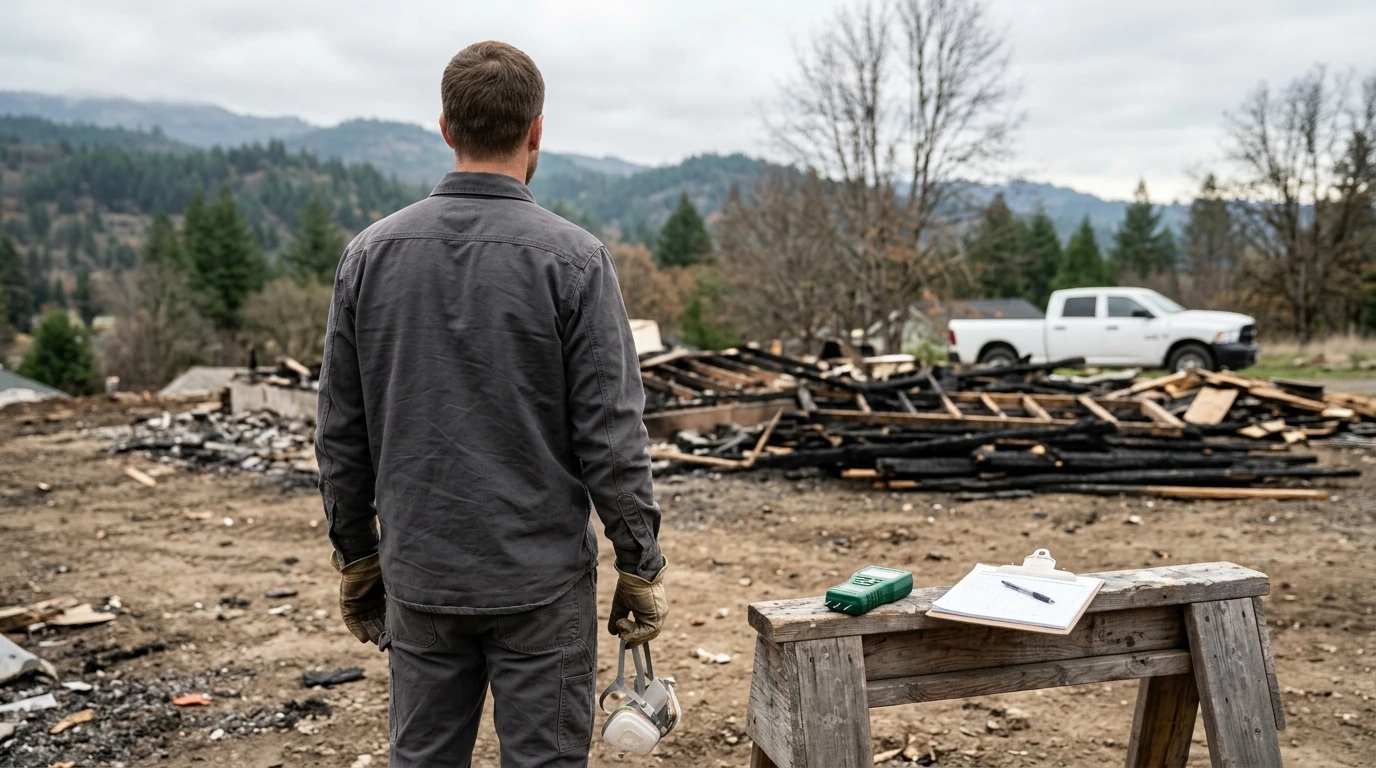
TL;DR: In Talent, OR, house fire debris removal typically costs $1,500 to $4,000 for a single damaged room, $5,000 to $15,000 for a partial structure fire, and $15,000 to $40,000 or more for a total loss, depending on square footage, hazardous materials, and haul distance to an approved disposal site. Most standard homeowners policies include some debris removal coverage tied to the dwelling limit, but asbestos testing and abatement in older homes usually cost extra and require a licensed abatement contractor, not a general debris crew.
If your home in Talent just burned and you’re staring at a pile of charred framing, melted siding, and soaked insulation, the question isn’t really “what does this cost” in the abstract. It’s “what does MY pile cost,” and the honest answer depends on how big the loss is, what the house was built with, and how far the debris has to travel to get dumped legally. Jackson County has plenty of homes built before 1980, which adds a wrinkle most people don’t think about until a contractor brings it up.
How Much Does House Fire Debris Removal Cost in Talent, OR?
Most homeowners in the Rogue Valley pay somewhere between $1,500 and $40,000 for fire debris removal, with the number driven almost entirely by how much of the structure is gone and whether hazardous materials are involved.
| Scope of Loss | Typical Cost Range |
|---|---|
| Single room, contents and debris haul only | $1,500 - $4,000 |
| Partial structure (one wing, floor, or attached garage) | $5,000 - $15,000 |
| Full structure, total loss, complete debris removal | $15,000 - $40,000+ |
| Hazardous material testing and abatement (pre-1980s homes) | $2,000 - $8,000 added |
| Standard construction debris haul (per 20-yard dumpster load) | $400 - $900 per load |
These are typical industry ranges for the Jackson County area, not a quote. Every fire scene is different, and a legitimate contractor should give you a written scope before any debris moves, not a number over the phone.
What Drives the Price of Fire Debris Removal?
Four factors move the price more than anything else: how much square footage burned, whether hazardous materials are present, how far the debris has to be hauled, and how accessible the site is for equipment.
- Structure size. A single-room kitchen fire leaves a fraction of the debris a full structure fire does. Square footage affected is the single biggest cost driver.
- Hazardous materials. Older homes in Talent and Phoenix, especially anything built before the early 1980s, may have asbestos-containing siding, floor tile, or insulation. Lead paint is also common in pre-1978 construction. Both require testing before demolition starts.
- Haul distance and disposal fees. Debris has to go to an approved transfer station or landfill. Distance and tipping fees both factor into the per-load cost.
- Site access and contamination level. A home a dump truck can pull right up to costs less to clear than one that needs hand-carried debris staging because of a narrow driveway or steep lot, common in parts of the Rogue Valley’s hillside neighborhoods.
Does Homeowners Insurance Pay for Debris Removal After a Fire?
Most standard homeowners policies include some debris removal coverage, but it’s usually tied to your dwelling coverage limit rather than paid as an unlimited, separate line item.
Fire is one of the perils covered by a typical homeowners policy, and debris removal tied to a covered fire loss is generally included as part of settling that claim, per the Insurance Information Institute. The exact structure of that coverage, including any cap, varies by insurer and by the specific policy language, so check your declarations page or ask your adjuster directly how debris removal is handled under your policy. Document everything with photos before anything is hauled away. That documentation protects the claim and is part of why our fire damage restoration process starts with photo documentation before any demolition begins.
What Happens to Ash and Debris That Test Positive for Asbestos?
Asbestos-contaminated debris cannot be removed by a general cleanup or debris crew. It has to be tested, then handled by a licensed abatement contractor following state and federal rules.
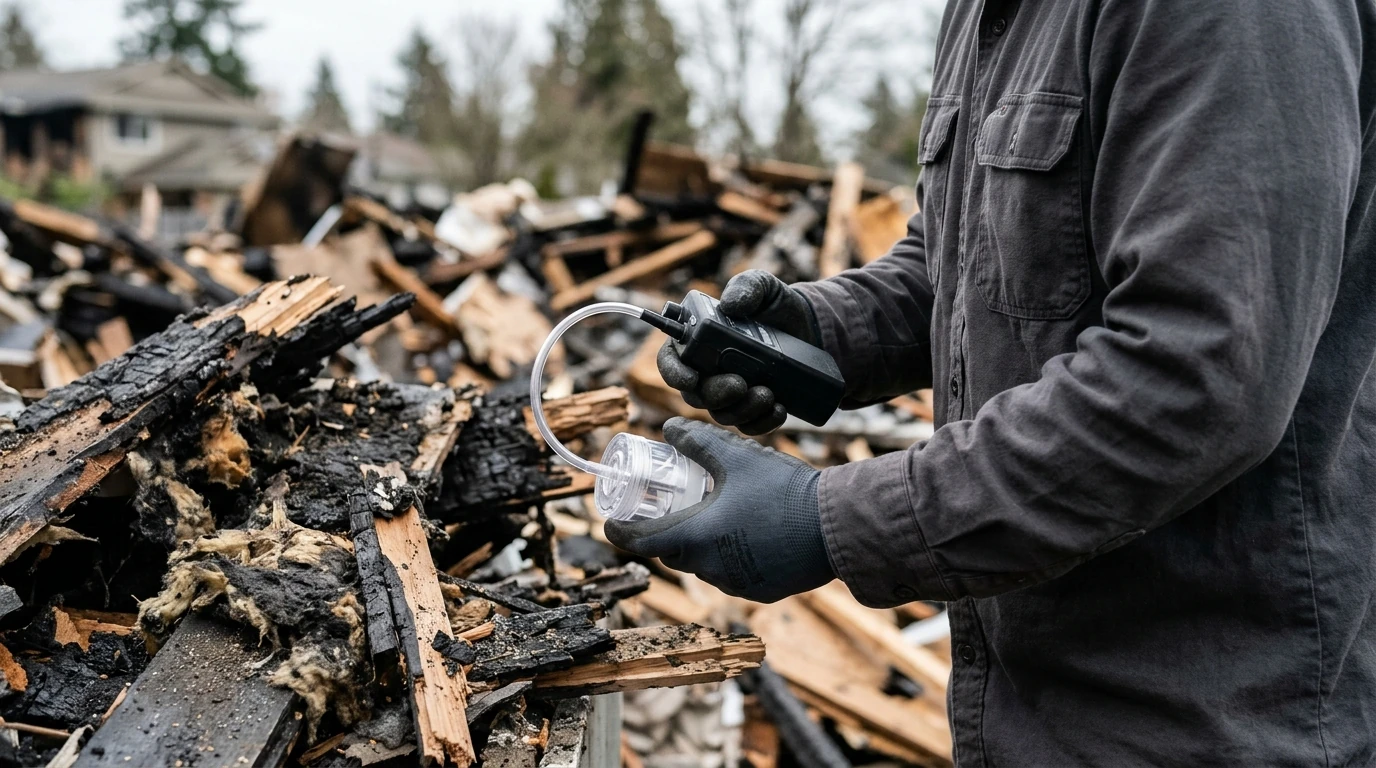
If your Talent home was built before the early 1980s, a responsible contractor will recommend testing debris and remaining building materials before demolition starts, not after. The EPA’s asbestos guidance outlines why disturbed asbestos-containing material is a health hazard when it becomes airborne. When testing comes back positive, abatement work is scoped and performed separately from the general debris haul, and it’s billed separately too. Oregon’s state environmental agency also has specific guidance for post-fire debris handling that a licensed abatement contractor will be familiar with.
Demolition vs. Selective Tear-Out: Which Do You Need Before a Rebuild?
Full demolition removes everything down to the foundation; selective tear-out removes only the fire-, smoke-, or water-damaged materials and leaves sound structure in place.
A total loss, where the frame itself is compromised, generally needs full demolition before anything can be rebuilt. A partial loss, where the fire stayed contained to one room or one side of the house, is often a better candidate for selective tear-out: pulling damaged drywall, insulation, and flooring while keeping undamaged framing, electrical, and plumbing intact. Selective tear-out is cheaper and faster, but it only works when a structural assessment confirms the remaining framing is sound. That assessment should happen before any demo crew swings a sledgehammer.
What Permits Does Jackson County Require Before You Rebuild?
Jackson County requires building permits for structural demolition and for rebuilding fire-damaged portions of a home, and inspections happen at multiple stages of the rebuild.
The permitting process typically starts with a demolition permit (if a full or partial teardown is needed), followed by building permits for framing, electrical, plumbing, and mechanical work as the rebuild progresses. Each trade generally needs its own inspection before the next phase can start. Timelines vary depending on the county’s current permit volume, so it’s worth checking with the Jackson County building department directly on current turnaround times before locking in a rebuild schedule.
Once debris is cleared, site conditions are documented, and any hazardous materials have been handled by a licensed abatement contractor, the next step is lining up the people who will actually rebuild. Swept Away Restoration handles the fire damage restoration work plus the reconstruction and general contracting side of the job, so the same team that documents the loss for your insurance claim can also carry the project through permitting and rebuild once the site is ready.
About Swept Away Restoration
Swept Away Restoration is an IICRC Certified Firm (license #242626) serving Ashland, Talent, and the Rogue Valley since 2018, from offices in Ashland and Talent. The company’s crews handle fire damage restoration, smoke damage restoration, water damage and sewage cleanup, mold remediation, contents restoration and storage, and reconstruction and general contracting work across Jackson County, and the phone is answered 24/7.
Need help now? Call Swept Away Restoration at (541) 821-3664.