TL;DR: Mold remediation in Talent, OR typically costs $500 to $1,500 for a small, isolated patch and $2,000 to $8,000 for attic, crawl space, or wall-cavity mold tied to a moisture problem. Whole-house or HVAC contamination can run $6,000 to $15,000 or more. The biggest price drivers are square footage, how hard the area is to access, how much material has to come out, and whether the moisture source gets fixed at the same time.
If you just found mold in the attic after last winter’s roof leak, or your home inspector flagged musty crawl space insulation before closing on a Talent property, the number you’re looking for is a real range, not a guess. Homes in the Rogue Valley sit on a mix of older slab and raised crawl-space foundations, and many picked up moisture damage during wetter winters or from irrigation runoff near Bear Creek. That combination (older building materials plus seasonal moisture) is exactly what drives most of the mold calls in this area.
How much does mold remediation cost by location in the house?
Where the mold is growing matters more than almost anything else, because it determines access, containment, and how much material has to be removed.
| Scope of job | Typical cost range |
|---|---|
| Small, localized patch (bathroom exhaust fan, closet, under 10 sq ft) | $500 - $1,500 |
| Attic mold (roof leak or poor ventilation, moderate spread) | $2,000 - $6,000 |
| Crawl space mold (vapor barrier failure, standing moisture) | $2,500 - $7,500 |
| Wall cavity mold (behind drywall from a slow plumbing leak) | $3,000 - $8,000 |
| Whole-house or HVAC system contamination | $6,000 - $15,000+ |
| Post-remediation clearance testing (often billed separately) | $300 - $800 |
These are typical industry ranges, not a quote. Every Talent home is a different combination of square footage, foundation type, and how long the moisture has been sitting, so a written scope after an on-site inspection is the only way to get an actual number.
What actually drives the price up or down?
The price moves with how much contaminated material has to come out and how hard the space is to work in, not just the square footage of visible mold.
Affected area and material type. Porous materials like drywall, insulation, and carpet pad usually get removed rather than cleaned, per the ANSI/IICRC S520 mold remediation standard. Non-porous surfaces like framing lumber and concrete can often be HEPA-vacuumed and treated in place, which costs less.
Accessibility. A lot of homes in Talent and the surrounding Rogue Valley sit on raised crawl space foundations. Working in an 18-inch crawl space in full PPE takes longer than working in an open attic, and that labor time shows up in the price.
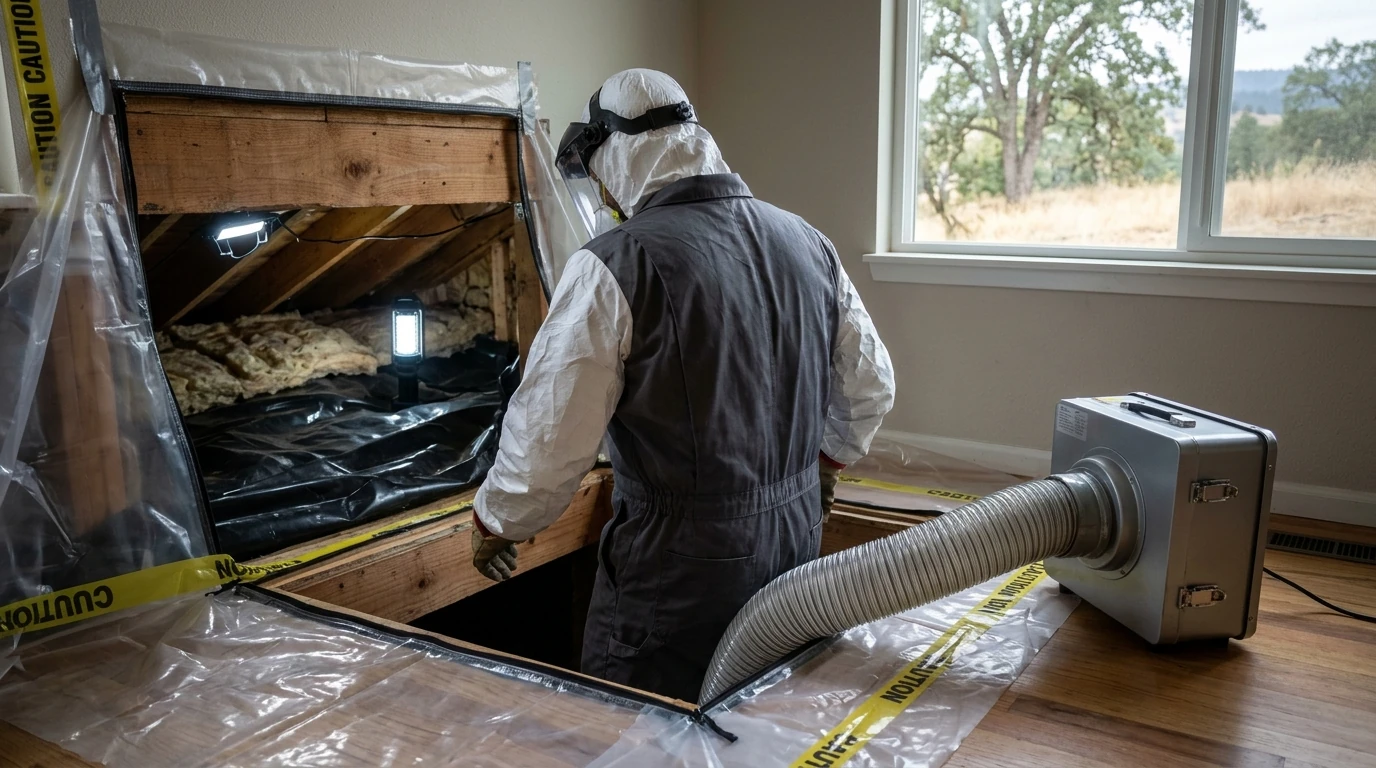
Containment requirements. Mold jobs typically require sealing the work area with poly sheeting and running negative air machines so spores don’t spread to the rest of the house during removal. Larger or more contaminated areas need more containment barriers and longer equipment run times.
Moisture source repair. Remediating the mold without fixing what caused it (a roof leak, a failed vapor barrier, condensation on ductwork) means the mold comes back. Source repair is sometimes quoted separately, but skipping it is the single most common reason a mold job has to be redone.
Clearance testing. Many remediation companies recommend a third-party clearance test after the work is done, confirming spore counts have returned to a normal range. This is often an added line item rather than bundled into the remediation price.
Does homeowners insurance cover mold remediation?
Usually only partially, and only when the mold came from a sudden, covered event, not from a leak that sat unaddressed for months.
If a pipe burst suddenly and mold developed within the days before it was caught, most homeowners policies will cover remediation tied to that water damage claim, though many carriers cap mold-specific payouts at a few thousand dollars regardless of the total claim. If the mold came from a slow roof leak, a cracked foundation, or long-term crawl space humidity that went unaddressed, insurers typically treat that as a maintenance issue and deny the claim. According to the Insurance Information Institute, gradual damage from lack of maintenance is a standard exclusion across most policies. Coverage details vary by carrier and policy, so check the actual language before assuming either way.
Photograph the mold and the moisture source before any remediation starts, and keep every receipt. That documentation is what separates an approved claim from a denied one. The EPA’s mold cleanup guidance is a useful reference for what proper remediation looks like if an adjuster asks for specifics. If you’re unsure whether what you’re looking at is mold or just surface discoloration, our guide on black mold vs. regular mold walks through how to tell the difference before you spend money on testing.
What does the remediation process actually involve?
A proper mold job follows a sequence, and skipping steps is usually what leads to a callback.
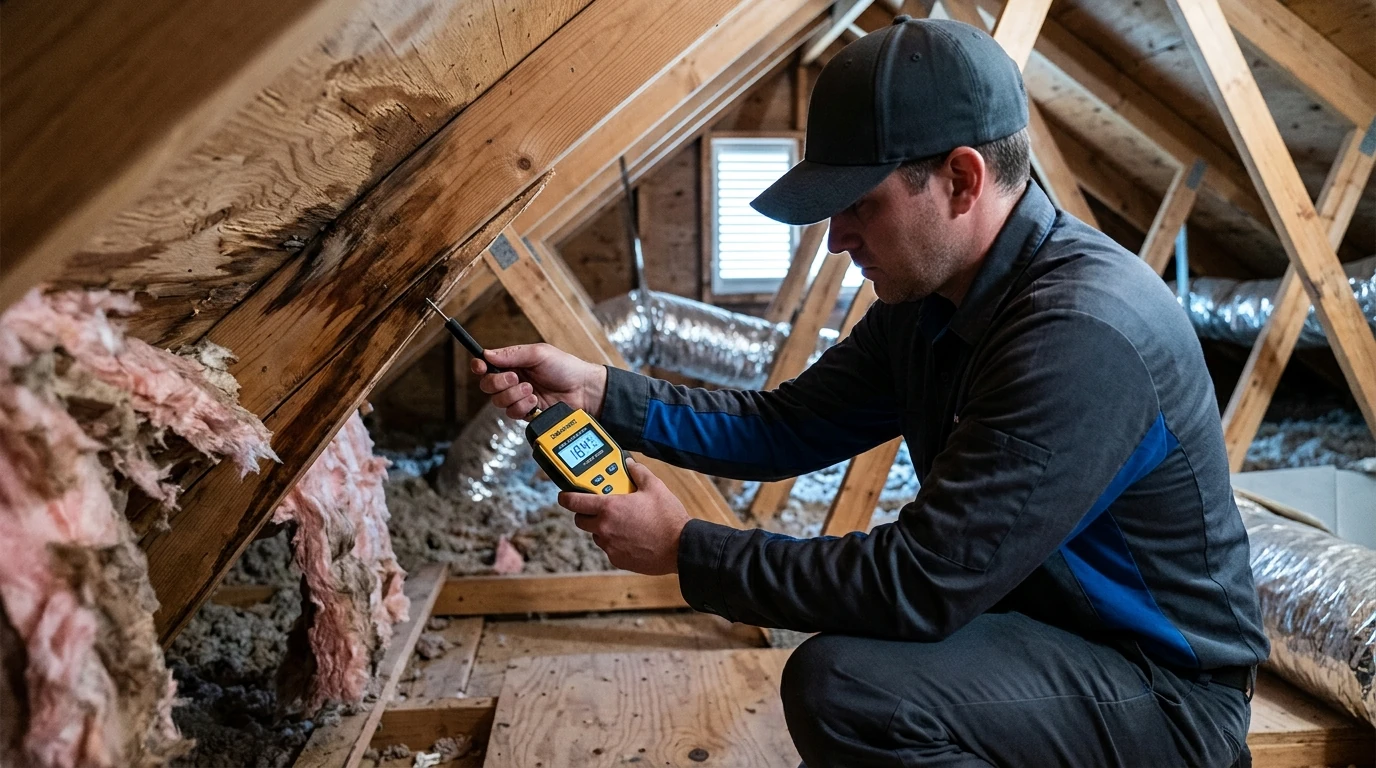
- Inspection and moisture mapping. A tech identifies the mold’s extent and locates the moisture source, often with a moisture meter and sometimes air or surface sampling. This is a separate scope from remediation itself, more on that in our mold inspection and testing page.
- Containment setup. Poly sheeting seals off the work area and negative air machines keep spores from migrating to clean parts of the house.
- Material removal. Contaminated drywall, insulation, or subfloor comes out and goes into sealed bags for disposal.
- HEPA cleaning. Remaining surfaces get HEPA-vacuumed and treated with an EPA-registered antimicrobial.
- Moisture source repair. The leak, ventilation gap, or vapor barrier failure that caused the mold gets addressed, sometimes by the remediation crew and sometimes by a separate contractor.
- Clearance testing. A final check confirms the space is back to a normal spore count before containment comes down.
When is it worth calling a professional instead of handling it yourself?
If the affected area is larger than about 10 square feet, the EPA recommends professional remediation rather than a DIY cleanup, mainly because of how easily disturbed mold spreads through HVAC systems and wall cavities.
Small, isolated spots on a hard, non-porous surface can sometimes be cleaned with soap and water by a homeowner. Anything behind drywall, in an attic, or in a crawl space usually needs containment and material removal that goes beyond a DIY scrub. Working with a licensed, IICRC-certified firm like Swept Away Restoration gives you documented, standards-based work that holds up if an insurance adjuster or a home buyer’s inspector asks questions later.
If you’re staring at a musty crawl space or discolored attic sheathing in Talent right now, the next useful step is a written inspection report that spells out the affected area, the moisture source, and a scope of work before anyone touches a tool. Our mold remediation team can walk a Talent property and put that scope in writing before any work starts.
About Swept Away Restoration
The company is an IICRC Certified Firm (license 242626) serving Ashland, Talent, and the Rogue Valley since 2018, with offices in Ashland and Talent. Its technicians hold IICRC credentials in water restoration, structural drying, and mold remediation, and the company handles mold remediation, water damage restoration, fire and smoke restoration, storm damage, and related reconstruction work across Jackson County.
Need help now? Call Swept Away Restoration at (541) 821-3664.