If a pipe just burst or you’re staring at a soaked carpet and trying to figure out whether this is a $1,500 problem or a $10,000 problem, the honest answer is: it depends on the water. In Oregon, water damage restoration typically runs $1,500 to $4,000 for a single clean-water room and $7,000 to $15,000 or more for a sewage backup or a multi-room loss that touches drywall, subfloor, and insulation.
The biggest swing factor isn’t square footage, it’s what kind of water you’re dealing with and how fast someone starts drying it out. A homeowner in Talent dealing with a washing machine supply line that let go overnight is in a very different cost bracket than one dealing with a backed-up sewer line in the same neighborhood along the Bear Creek corridor.
How much does water damage restoration cost in Oregon?
Most Oregon homeowners pay between $1,500 and $8,500 for a typical residential water loss, with sewage or black-water jobs running higher. The number is driven by the water’s contamination level (what the IICRC calls Category 1, 2, or 3), how much square footage is affected, and whether materials like drywall, insulation, or flooring need to be removed rather than dried in place.
A small, clean-water event caught quickly, like a supply line failure, often stays under $4,000 because the materials can usually be dried in place rather than torn out. A loss that sat for a day or two, or one involving gray or black water, costs more because contaminated porous materials (carpet pad, baseboards, drywall below the waterline) typically get removed rather than dried, per ANSI/IICRC S500 guidance.
Typical cost ranges by scenario
| Scenario | Typical Cost Range |
|---|---|
| Single room, Category 1 (clean) water, under 500 sq ft | $1,500 - $4,000 |
| Multi-room clean water loss, 500-1,500 sq ft | $4,000 - $8,500 |
| Category 2 (gray water), appliance or toilet overflow | $3,500 - $7,500 |
| Category 3 (black water), sewage backup | $7,000 - $15,000+ |
| Basement flooding with flooring/drywall removal | $5,000 - $12,000 |
| Water damage with secondary mold growth | add $1,500 - $6,000 |
These are typical industry ranges, not a quote. Every loss is different, and a written scope of work should always come before any restoration company starts the job.
What actually drives the price up or down?
Four factors move the number more than anything else: water category, how long the water sat, how much square footage and how many materials are affected, and whether the repair triggers any code upgrades. Everything else is secondary.
Water category. Category 1 (clean) water from a supply line is the cheapest to remediate. Category 2 (gray water) from an appliance or a toilet overflow with urine but no feces costs more because contaminated materials often need to come out. Category 3 (black water), which includes any sewer or drain backup from beyond the trap, sewage, or storm water flowing in from outside, always costs the most because it requires antimicrobial treatment, full PPE, and more aggressive material removal.
Time before drying starts. Mold can begin growing on wet materials within 24 to 48 hours, according to the EPA. A loss addressed same-day often avoids a second remediation bill entirely. One left over a long weekend frequently turns into a mold job on top of the water job.
Square footage and materials. Drying a single bedroom with carpet is far cheaper than drying an open-concept kitchen and living room with hardwood, cabinetry, and baseboards all touching the waterline. Hardwood and plaster fall into IICRC Class 4, which takes longer and more specialized equipment to dry than carpet or drywall.
Code upgrades during reconstruction. If drywall, insulation, or flooring has to be replaced, current building code sometimes requires upgrades (insulation R-value, electrical outlets near wet areas) that a like-for-like repair wouldn’t have needed. That adds to the reconstruction line item, separate from the drying and extraction cost.
Will homeowners insurance cover the cost?
Most Oregon homeowners policies cover sudden, accidental water damage, like a burst pipe or a failed appliance hose, but exclude gradual leaks and wear and tear, per the Insurance Information Institute. A slow leak behind a wall that’s been dripping for months is typically treated as a maintenance issue, not a covered loss.
Two gaps trip people up specifically in the Rogue Valley. First, flood damage from rising creek water or surface water flowing into the home is never covered by a standard homeowners policy; that requires a separate flood policy through the National Flood Insurance Program. Second, a sewer backup or a failed sump pump is only covered if the policy has a water backup endorsement added; without it, a Category 3 sewage loss can be an out-of-pocket expense even though it happened inside the home.
Documentation protects the claim either way. Photos of standing water, moisture readings, and a written scope of work before repairs begin all support a faster, cleaner claims process. For more on what a standard policy does and doesn’t cover, see Does Homeowners Insurance Cover Water Damage?
What does the restoration process actually involve?
A typical water damage job runs through five phases: assessment, extraction, drying, monitoring, and repair. Each phase has its own cost line, which is why a full invoice looks different from a single flat number.
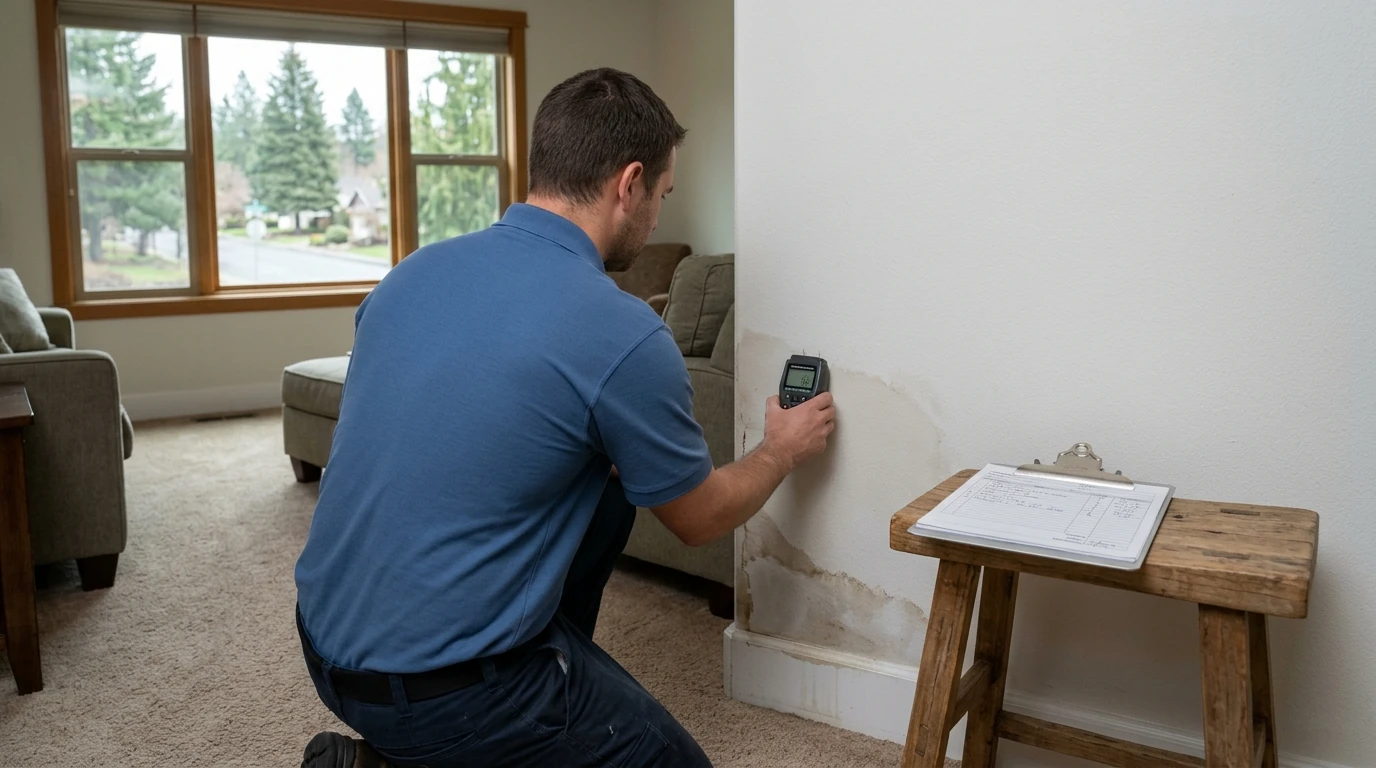
- Assessment. A technician identifies the water category, measures moisture in affected materials, and documents the extent of the loss with photos for the insurance file.
- Extraction. Standing water gets pulled out with truck-mounted or portable extraction equipment before drying equipment goes in.
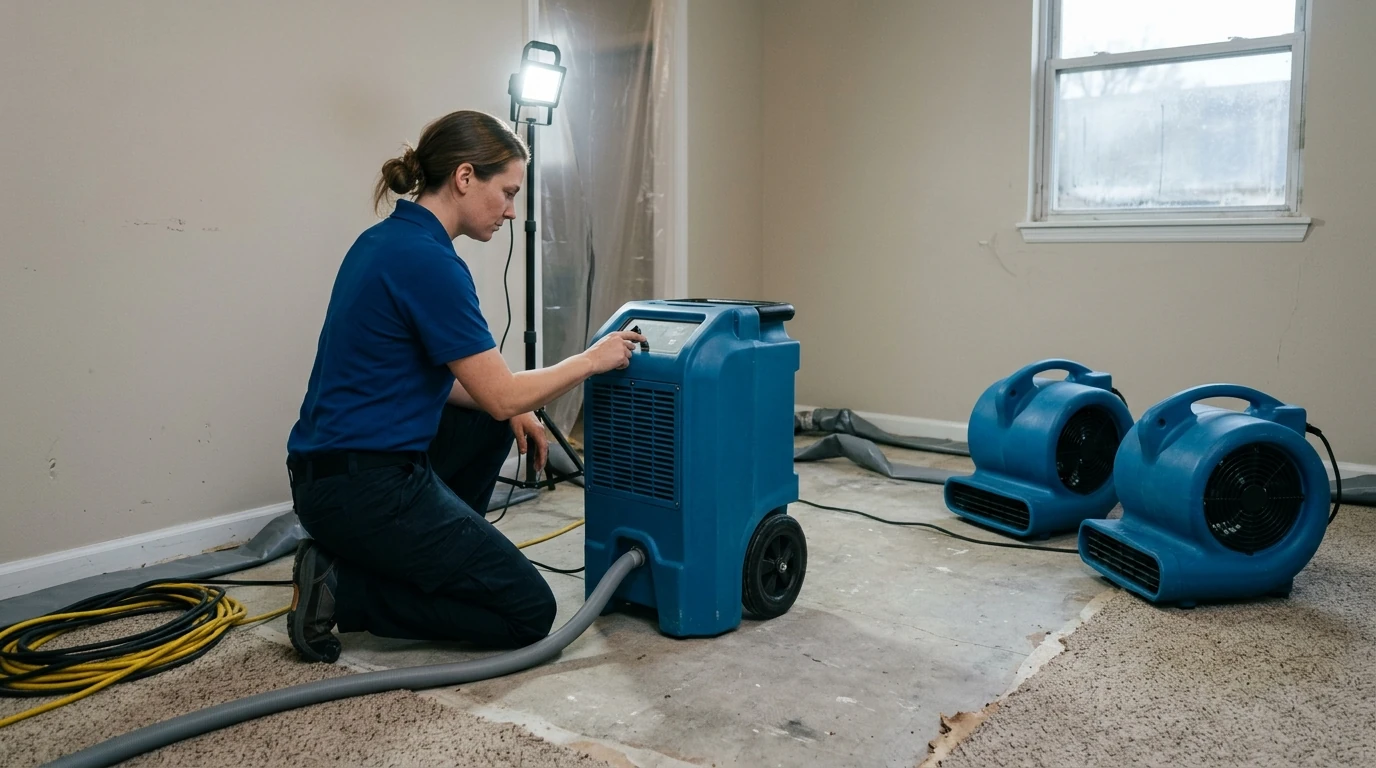
- Drying. Air movers and dehumidifiers run until moisture readings in the walls, subfloor, and framing return to a dry standard, typically dried to the ANSI/IICRC S500 benchmark rather than a guess.
- Monitoring. Moisture levels get re-checked over several days; equipment stays in place until the structure is actually dry, not just visually dry.
- Repair and reconstruction. Any removed drywall, flooring, or insulation gets replaced. If you’re still in the first hours of a loss, What To Do in the First 24 Hours After Water Damage walks through the steps before a crew even arrives.
For water damage anywhere from Ashland to Talent along the Highway 99 corridor, Swept Away Restoration provides a written scope of work before any repair begins, so the cost estimate reflects the actual loss rather than a generic average.
About Swept Away Restoration
Swept Away Restoration is an IICRC Certified Firm (license #242626) serving Ashland, Talent, and the surrounding Rogue Valley since 2018, with offices in Ashland and Talent. Its technicians hold IICRC Water Restoration Technician and Applied Structural Drying certifications and the company answers calls 24/7. The team handles water cleanup, water damage restoration, sewage cleanup, storm damage, mold remediation, fire and smoke damage, and related reconstruction work across the region, and carries a 5.0 Google rating from 46 reviews.