TL;DR: In Talent, OR, water damage restoration typically costs $500 to $15,000 or more. The price depends on the water’s contamination level (Category 1, 2, or 3), how much square footage is affected, and whether materials can be dried in place or need to be removed. Most Oregon homeowners policies cover a sudden pipe burst but not a slow leak or an uncovered sewer backup. A written scope from a licensed restoration company, not a flat phone quote, is the only reliable way to know your real number.
If a supply line split behind your water heater during a winter cold snap, or the dishwasher backed up and soaked into the subfloor near your kitchen, you’re probably staring at wet flooring and wondering what this is going to cost before you’ve even made a call. Talent’s older housing stock, especially homes built before 1980 near the historic core along Bear Creek, often still runs galvanized supply lines and crawl-space plumbing that freezes and fails more easily than newer construction. The honest answer about cost: it depends on what kind of water it is, how far it traveled, and how fast someone caught it.
How Much Does Water Damage Restoration Cost in Talent, OR?
Most residential water damage jobs in the Rogue Valley run from a few hundred dollars for a small, caught-early extraction to $15,000 or more for a contaminated loss that requires tear-out and reconstruction. The number moves on three variables: the water’s category (how contaminated it is), the square footage affected, and whether materials can be dried in place or need to come out.
Here’s how that typically breaks down by scenario:
| Scenario | Typical Cost Range |
|---|---|
| Water extraction only, small area under 500 sq ft, Category 1 | $500 - $1,500 |
| Extraction + structural drying, single room, Category 1-2 | $1,500 - $4,000 |
| Multi-room drying, moderate Category 2 water, some tear-out | $4,000 - $8,500 |
| Category 3 water (sewage or floor-drain backup) with contaminated material removal | $7,000 - $15,000+ |
| Water damage requiring reconstruction (drywall, flooring, cabinets) | $10,000 - $25,000+ |
These are typical industry ranges, not a quote. Every loss is different, and a licensed restoration company should give you a written scope before any work starts. As a rough baseline, extraction and structural drying for Category 1-2 water typically runs about $3.50 to $7.00 per square foot; Category 3 losses or extensive tear-out push well past that because contaminated materials usually get removed rather than dried.
What Actually Drives the Price of a Water Damage Job?
Five factors set the final number: water category, drying class, square footage, equipment run time, and whether materials need to be replaced instead of dried. Understanding these is the difference between a confusing invoice and one that makes sense.
Water category matters most. Under the ANSI/IICRC S500 standard, Category 1 is clean water from a sanitary source like a burst supply line or water heater. It doesn’t stay clean for long: once it sits or touches building materials, it can become Category 2 (gray water, from sources like a washing machine discharge or groundwater seepage) or Category 3 (black water, which includes sewage, any backup from beyond the trap, or rising flood water). Category 3 jobs cost more because contaminated porous materials, drywall, insulation, some flooring, usually get removed instead of dried, and the space needs antimicrobial treatment.
Drying class (Class 1 through 4 under the same standard) describes how much water is involved and how hard it is to dry. A Class 4 loss, think saturated hardwood, plaster, or concrete, needs specialty drying equipment and more days of runtime than a Class 1 loss in a mostly-dry room.
Square footage and equipment days stack directly onto the bill. Air movers and dehumidifiers are typically billed per unit per day, and a job that needs five days of drying instead of two will cost proportionally more, regardless of category.
Tear-out vs. dry-in-place is the biggest swing factor. A clean-water loss caught within hours often dries in place with no demolition. A loss that sat overnight, or any Category 2/3 water, usually means cutting out wet drywall and subflooring, which adds both demolition and reconstruction costs.
Does Homeowners Insurance Cover Water Damage Restoration in Oregon?
Most Oregon homeowners policies cover sudden, accidental water damage, like a pipe that bursts without warning, but they typically exclude gradual leaks, long-term seepage, and flood water. According to the Insurance Information Institute, a standard policy responds to sudden and accidental losses from inside the home, not wear-and-tear issues a homeowner should have caught.
Sewer backups and sump pump failures are the common gap. These are usually NOT covered unless you’ve added a separate water backup (sewer/sump) endorsement to your policy, so check your declarations page before you assume. Flood water from a rising creek or surface runoff is excluded from standard homeowners policies entirely and requires a separate flood policy.
Homeowners also have a duty to mitigate: stopping the water source and starting drying promptly protects the claim. Photograph the damage before cleanup starts and keep every receipt. For a deeper walkthrough of what’s typically covered and what isn’t, see our guide on whether homeowners insurance covers water damage.
What Does the Restoration Process Actually Involve?
A standard water damage job moves through five to six phases, and understanding them explains where the cost comes from.
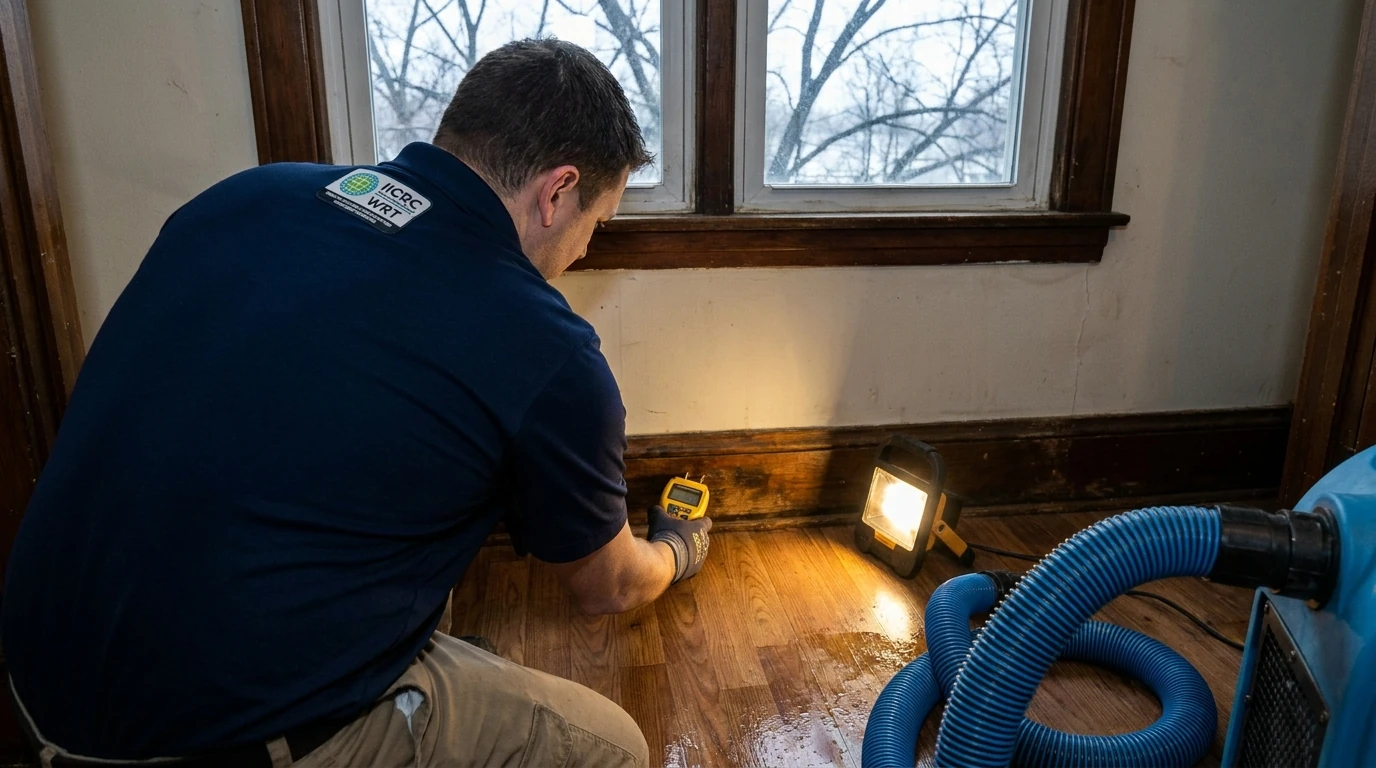
- Assessment and moisture mapping. A technician uses a moisture meter and often a thermal camera to find how far the water traveled, including inside walls and under flooring.
- Water extraction. Standing water is pulled out with truck-mounted or portable extractors before drying equipment goes in.
- Containment and demolition of unsalvageable materials. Anything too wet or too contaminated to dry, soaked insulation, swollen baseboards, Category 3-affected drywall, comes out now.
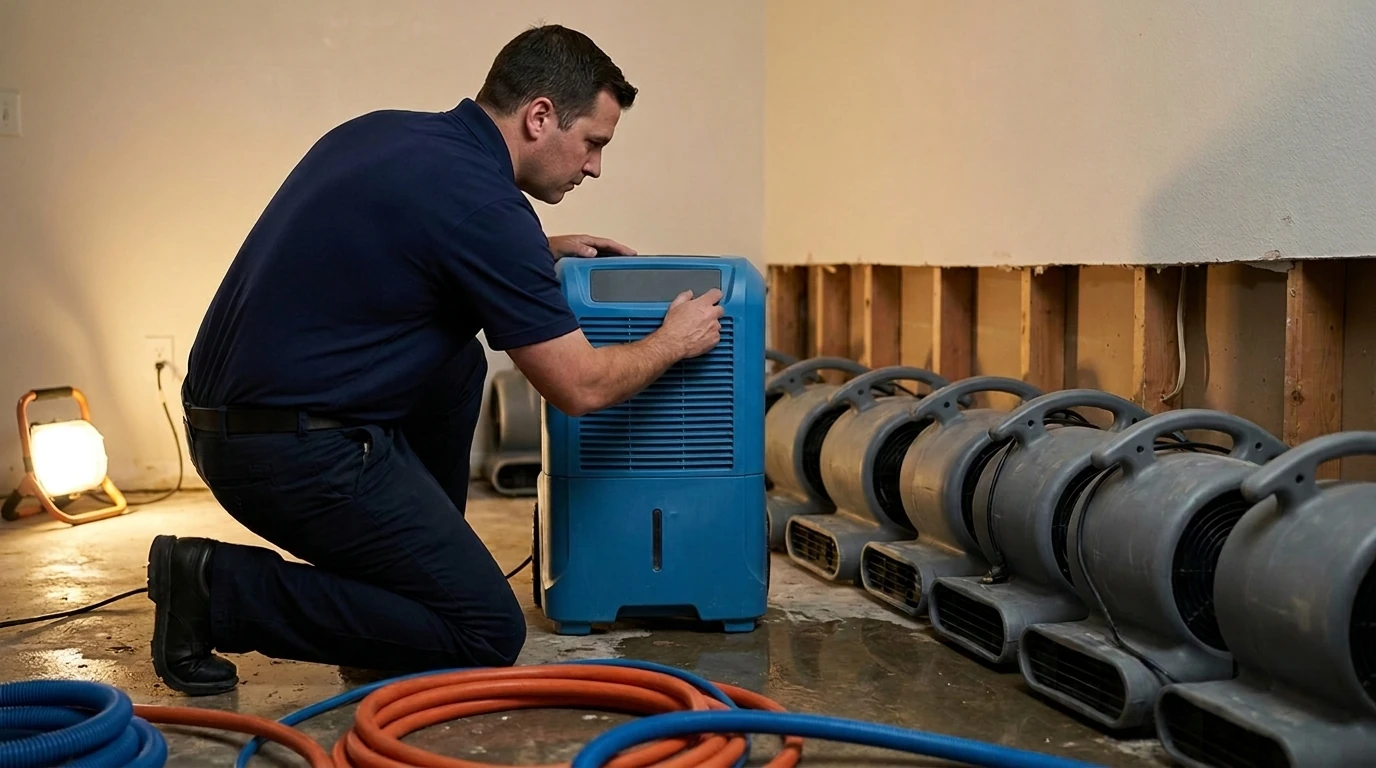
- Structural drying. Air movers and low-grain-refrigerant (LGR) dehumidifiers run for several days, with daily moisture readings to confirm materials are drying on schedule, not just evaporating surface moisture.
- Antimicrobial treatment, when the water was Category 2 or 3, to address contamination before materials are closed back up.
- Reconstruction, if drywall, flooring, or cabinetry needed to come out.
Who Should You Call First in Talent?
Call a licensed water damage restoration company before you call anyone else, because the first few hours determine both the final cost and whether mold becomes a second problem; EPA guidance notes mold can begin growing on wet materials within 24 to 48 hours. Call Swept Away Restoration at (541) 821-3664 for an on-site assessment and a written drying scope before you sign anything. Getting a documented moisture reading and a scope in writing, rather than a verbal estimate, is what protects you if the insurance adjuster questions the bill later.
If you’re still in the first hour after discovering the damage, shutting off the water source and moving valuables off wet flooring matters more than finding the cheapest quote. The company doing the drying should also be able to walk you through documentation for your claim, not just the cleanup itself.
About Swept Away Restoration
Swept Away Restoration is an IICRC Certified Firm serving Ashland, Talent, and the surrounding Rogue Valley since 2018 (Oregon license #242626). The crew holds IICRC Water Damage Restoration (WRT) and Applied Structural Drying (ASD) certifications and is available 24/7 from offices in Ashland and Talent, handling water damage restoration, water cleanup, emergency water removal, mold remediation, and related restoration services across Jackson County.