TL;DR: After a house fire in Ashland, OR, call 911 first if anyone is hurt or the fire isn’t fully out. Once firefighters clear the scene, call your insurance company’s claims line, then a certified fire and smoke damage restoration company to board up the property and start drying and documentation. Don’t touch soot-covered surfaces, don’t run the HVAC system, and don’t re-enter until the fire department says it’s safe.
If you’re standing on your lawn in Ashland watching the last fire engine pull away, your house is still smoking, and you genuinely don’t know what to do next, you’re not alone in that feeling. Most homeowners have never been through this and the order of calls matters more than people expect. Make the wrong call first, or wait too long on the right one, and you can lose coverage, lose belongings that were otherwise salvageable, or leave your home exposed to weather and theft overnight.
Who do I call first after a house fire in Ashland, OR?
Call 911 first if anyone needs medical attention or the fire department hasn’t declared the fire fully out. Once the scene is cleared and you have permission to approach or re-enter, the next calls go to your insurance company, then a restoration company that can secure the property and begin documentation the same day.
Here’s the order, in practice:
- 911 / the fire department - if there’s still active fire, smoke, or anyone injured. Don’t go back inside until a firefighter tells you it’s safe.
- Your homeowners insurance company - most carriers have a 24/7 claims line. Open the claim before you clean up or move anything, and ask what documentation they need.
- A fire and smoke damage restoration company - for emergency board-up, tarping, and the structural drying and smoke mitigation work that starts the clock on repairs. Swept Away Restoration, based in nearby Talent and answering calls 24/7, is one option at (541) 821-3664.
- Your utility company - if gas or power was shut off at the meter during the fire response, it usually has to be inspected and restored by the utility, not just flipped back on.
Doing it in this order protects both your safety and your claim. Calling the restoration company before the insurer still works fine, since most companies will coordinate directly with the adjuster, but the fire department and immediate safety always come first.
What should I do before firefighters leave the scene?
Ask the fire crew for a copy of the incident report number and get a clear answer on whether the structure is safe to enter, even briefly. That report number becomes one of the first things your insurance adjuster asks for.
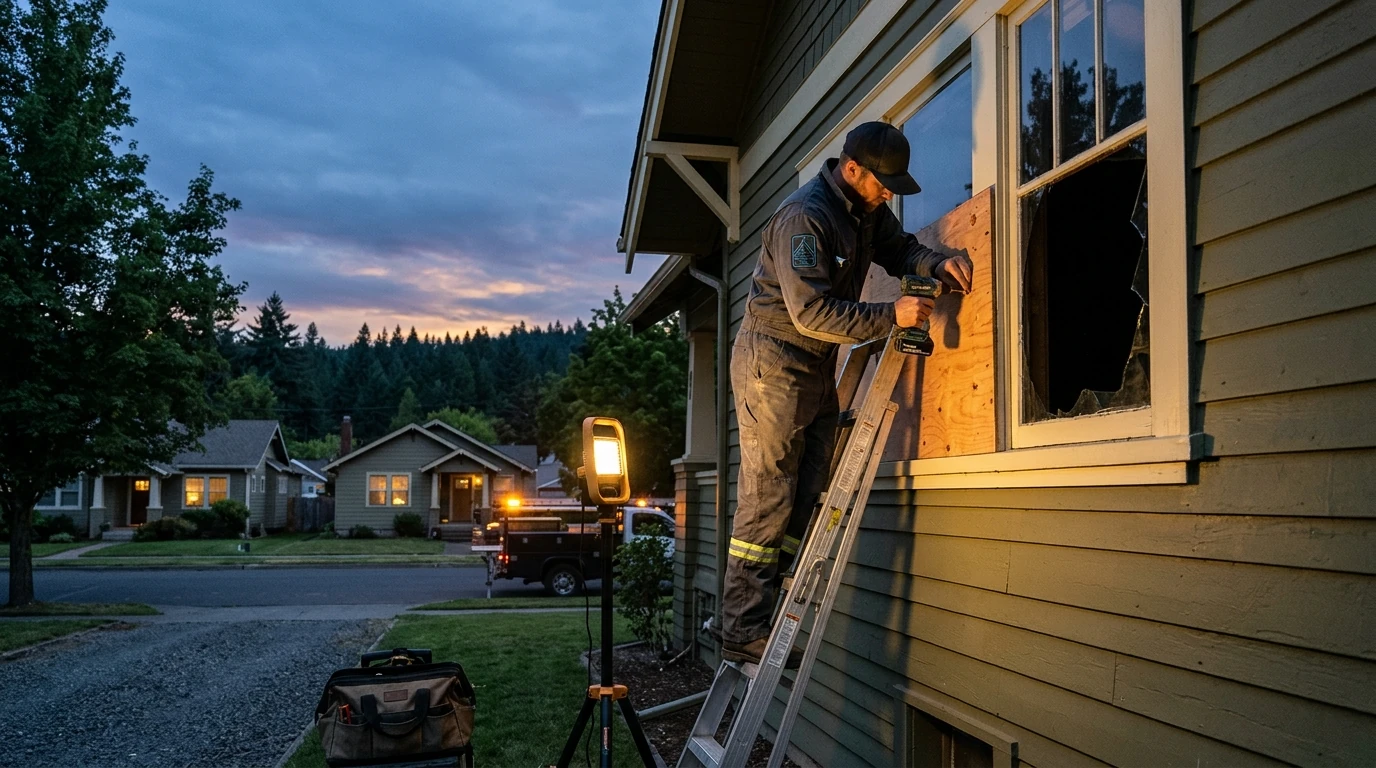
If you can, take photos of the exterior and any visible damage from a safe distance before anyone starts moving debris. Note which rooms the fire reached directly versus which rooms only got smoke or water from suppression efforts, since those get treated differently during restoration. If the department boards up a door or window as part of securing the scene, don’t remove that board yourself. A restoration crew will handle a proper board-up that’s weathertight and, in older Ashland homes near downtown with original wood siding and single-pane windows, that matters more than it would in newer construction.
What’s safe to touch after a house fire, and what should I leave alone?
Avoid touching soot-covered surfaces with bare hands and don’t run your HVAC system, since both can spread fine soot particles throughout the house and into fabric, ductwork, and electronics that otherwise could have been saved.
A few specifics worth knowing:
- Don’t wipe soot with a wet rag or water. It smears and can set the residue into drywall, paint, and upholstery, making it far harder to remove later.
- Don’t turn the furnace or AC back on. Soot in the ductwork recirculates through every vent in the house.
- Don’t throw out damaged items yet. Your insurer may need to see or inventory them before they’re hauled off, even if they’re clearly a loss.
- Don’t eat food that was in the kitchen during the fire, even in sealed containers, if it was exposed to heat or smoke for any length of time.
- Don’t assume electronics or appliances are fine just because they look untouched. Heat and soot infiltrate casings and can cause failures or shock hazards weeks later.
The Red Cross has a solid walk-through of what to do (and avoid) in the first hours after a home fire, and it’s worth reading even if you’ve already made your calls.
Does homeowners insurance cover a house fire, and what about Additional Living Expense?
Fire is one of the perils covered by nearly every standard homeowners policy, including the structure, your belongings, and often temporary living costs while the home is unlivable. That last piece is called Additional Living Expense, or ALE, coverage.
ALE typically reimburses the extra cost of hotel stays, meals above your normal grocery budget, and sometimes pet boarding while your home is being restored, up to a limit and time period set in your policy. It is not automatic. You generally need to submit receipts and keep the claim open, so ask your adjuster directly what ALE covers and for how long before you book a long-term rental. The Insurance Information Institute has a clear overview of what’s typically covered under a standard homeowners policy if you want the broader picture before your adjuster call.
A restoration company that documents the damage thoroughly, room by room, with photos and moisture or soot readings, gives your adjuster what they need to approve the claim faster. That documentation habit is also what separates a slow claim from one that moves in days instead of weeks.
What if it’s wildfire smoke, not an actual fire in my house?
Smoke from regional wildfires can infiltrate a home through HVAC intakes, attic vents, and even window and door seals without any flame ever touching the structure, and it still leaves soot particulate, odor, and ash residue behind. This is a real concern in the Rogue Valley during fire season, when smoke settles into the valley for days at a time.
If you’re noticing a persistent smoke smell, a fine gray film on surfaces, or HVAC filters clogging faster than usual after a smoke event, that’s infiltration, not imagination. The fix usually involves HVAC duct cleaning, surface cleaning with the right products (not just soap and water), and sometimes ozone or hydroxyl treatment to break down the odor at the source rather than mask it. It’s a different scope than a structure fire but still falls under smoke damage restoration.
What happens when you call a restoration company?
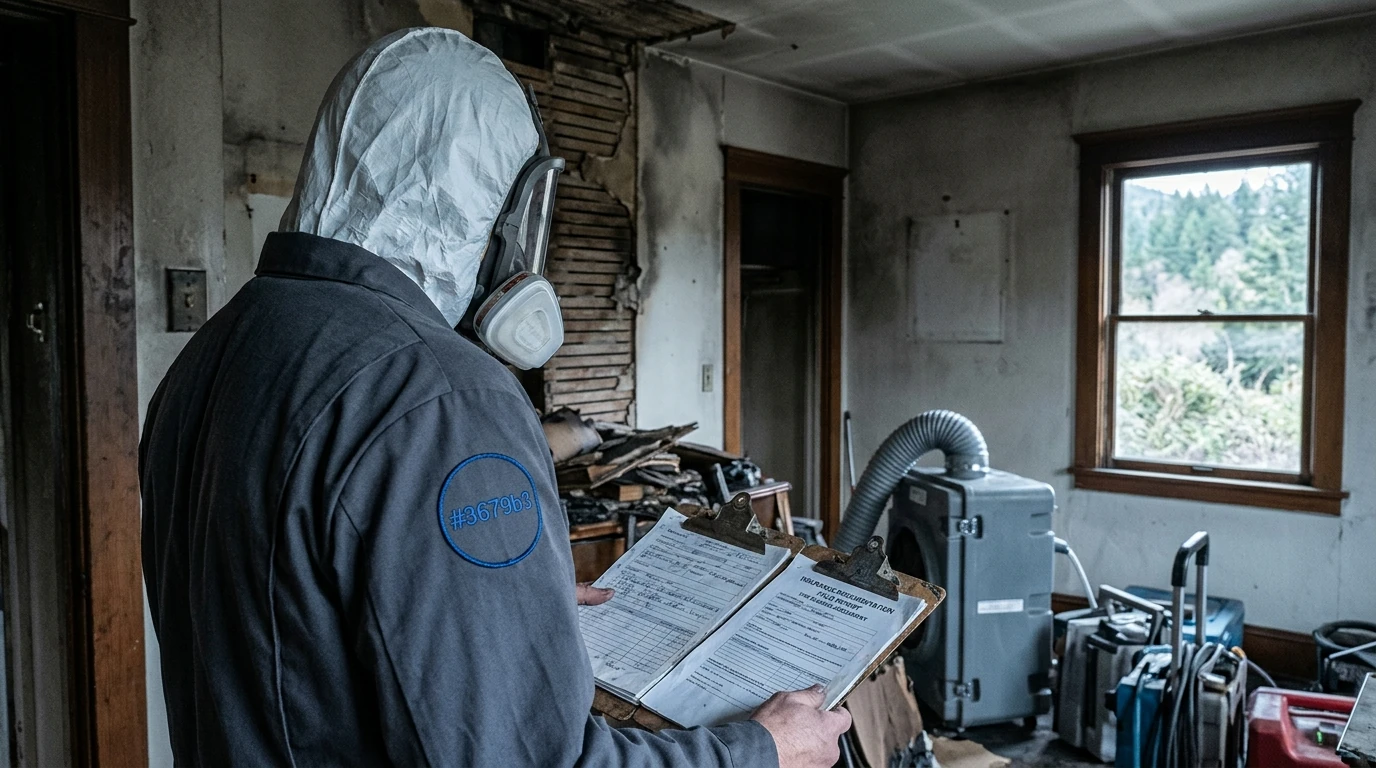
The first call is mostly information gathering: your address, whether the fire department has cleared the home, whether power and water are on, and what rooms were affected. From there, a crew typically handles emergency board-up or tarping first, since an open structure invites weather damage and theft, then moves into assessment, water extraction from suppression efforts, and soot and odor mitigation.
A written scope of work and photo documentation usually follow within the first day or two, which becomes the basis for working with your insurance adjuster. Larger jobs that involve rebuilding framing, drywall, or flooring move into reconstruction once drying and cleaning are complete. You can see the phases laid out in more detail in our guide to the fire damage restoration process.
If you’re dealing with this right now, the priority is simple: get everyone safe, make sure the fire department has cleared the scene, then start the insurance and restoration calls in that order. Schedule a fire damage assessment once the property is secured, and keep every receipt and photo from the moment you walk back in.
About Swept Away Restoration
The company is an IICRC Certified Firm serving Ashland and the Rogue Valley since 2018, holding IICRC WRT, ASD, and AMRT certifications along with EPA Lead-Safe certification (license #242626). Operating from offices in Ashland and Talent, the crew handles fire damage restoration, smoke damage restoration, reconstruction, water damage restoration, mold remediation, and related services across Jackson County, answering calls 24/7.
Need help now? Call Swept Away Restoration at (541) 821-3664.