TL;DR: After a house fire in Talent, call 911 first if the fire isn’t fully out or anyone is hurt or trapped. Once the fire department releases the scene, call your insurance company to open a claim and a licensed fire damage restoration company to board up the property, document the loss, and start drying and soot removal before smoke odor and moisture cause more damage.
If you’re standing outside a smoke-filled house in Talent right now, trying to figure out who to call next, here’s the order that actually matters. For fire damage restoration in Talent, OR, you can call Swept Away Restoration at (541) 821-3664 once the fire department has cleared the home. They’re a Rogue Valley company with offices in Ashland and Talent, run IICRC-certified crews, and answer the phone 24/7, so the first call doesn’t have to wait until Monday morning.
Who do you call first after a house fire?
Call 911 first, every time, if the fire is still active, anyone is injured, or you’re not sure the structure is safe to approach. Firefighters have to declare the scene safe before anyone, including a restoration crew, can legally go back inside.
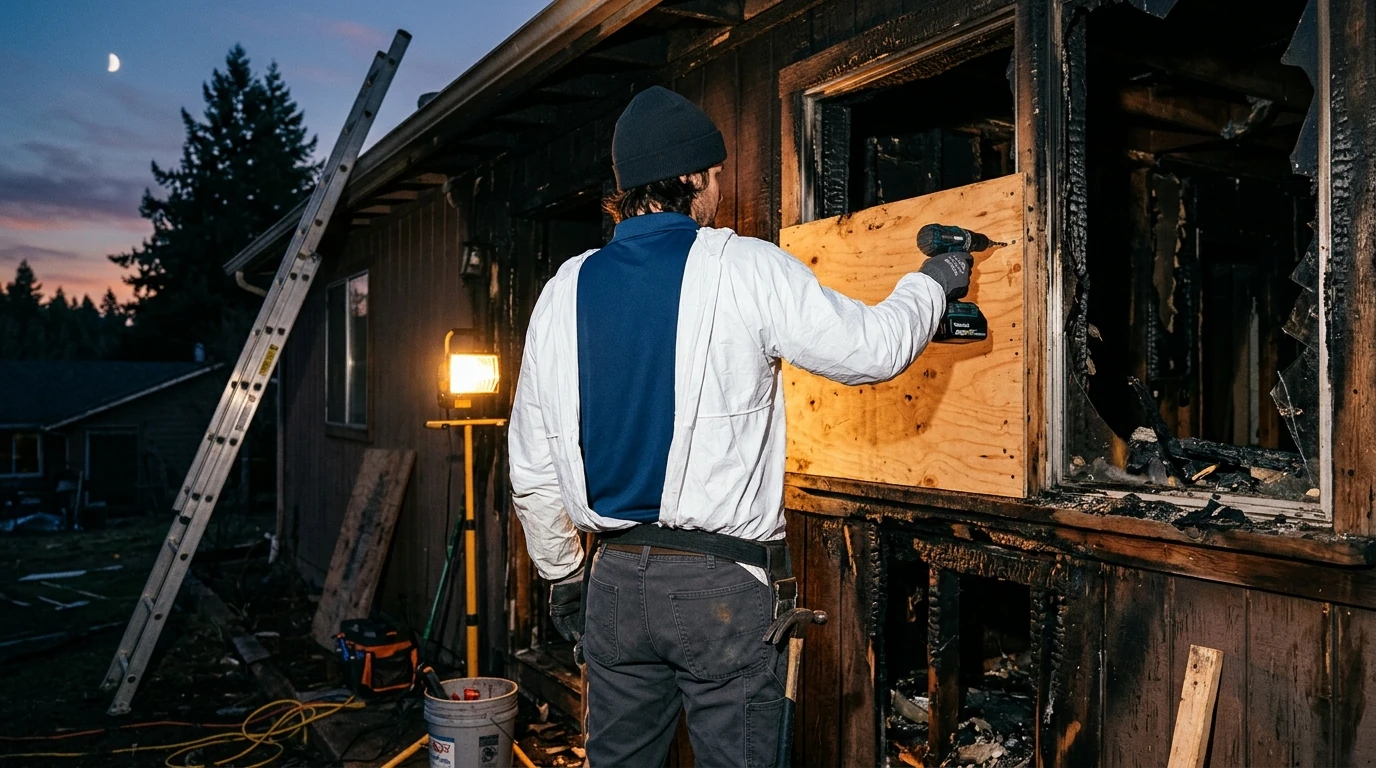
Once the fire department releases the property, the next two calls happen close together: your insurance company, to open a claim and get a claim number, and a restoration company, to secure the structure and stop secondary damage. Soot is acidic and starts etching metal and glass within hours, and a home with a burned-out window or door is an open invitation for weather and theft. Jackson County’s local fire crews handle the emergency; what happens in the days after is on you and whoever you call next.
When is it 911, the utility company, or a restoration company?
The rule of thumb: 911 handles active danger, the utility company handles gas and power, and a restoration company handles everything that’s left once the property is safe. If you smell gas, see a downed power line, or notice the home is structurally unstable (a sagging roofline, a leaning wall), that’s still a 911 or utility-company call, not a restoration call.
Once those hazards are cleared, a restoration company becomes the one coordinating the rest: emergency board-up, roof tarping, pack-out of salvageable belongings, and the documentation your insurance adjuster will ask for. Most homeowners don’t call the adjuster directly to coordinate repairs; the restoration company and the adjuster talk to each other, and you review the scope.
Is it safe to go back inside after the fire department clears the house?
Cleared by the fire department does not automatically mean safe to live in. Soot particles carry carbon and chemical residue from whatever burned, smoke can settle deep into HVAC ductwork and insulation, and standing water from fire suppression can soak subfloors and drywall within hours.
Walk through briefly to assess and retrieve essentials like medication or documents, wearing closed shoes and avoiding prolonged time in smoke-heavy rooms. Leave the HVAC system off so it doesn’t recirculate soot through the rest of the house. If smoke damage is widespread, plan to stay elsewhere until a fire damage restoration crew has assessed air quality and structural soundness, not just whether the flames are out.
What should you avoid touching or cleaning yourself?
Don’t wipe soot off walls, fabric, or electronics before a professional assesses it, because dry-wiping often grinds soot deeper into the material and makes it harder to remove later. Smearing soot can also mean the difference between a wall that gets cleaned and one that has to be repainted or replaced.
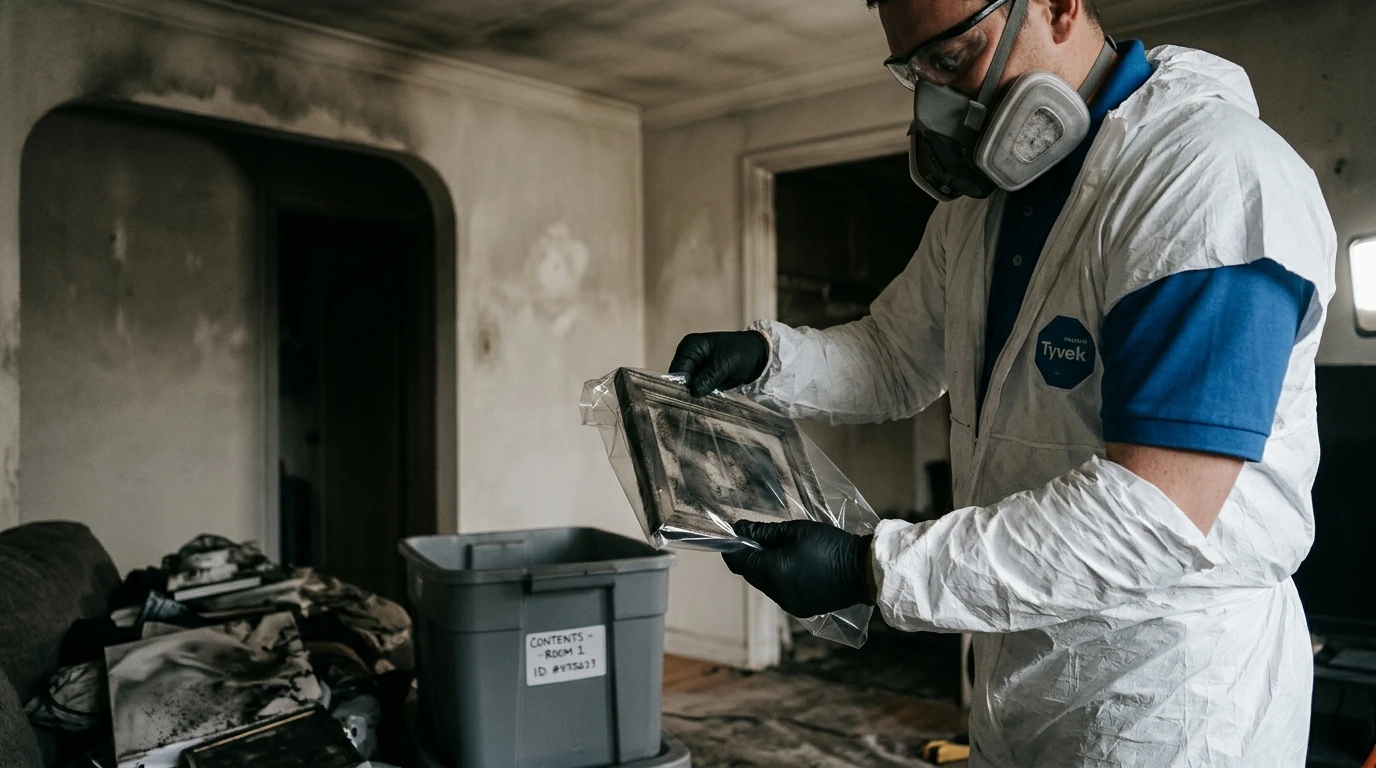
Leave upholstered furniture, clothing, and electronics alone too. Fabric and foam hold onto smoke odor and acidic residue long after the fire is out, and powered-on electronics that got wet or sooty can short out. A contents restoration and storage team can inventory, pack, and clean or store salvageable items off-site while repairs happen, which also protects what’s left from further smoke exposure.
What happens when you call a restoration company?
The first call is mostly information gathering: your address, what burned, whether the home is currently occupiable, and your insurance details if you have them. From there, a crew typically secures the property first (board-up, roof tarping), then documents the damage room by room with photos before anything is moved or cleaned.
Soot removal, odor treatment, and structural drying come next, following the IICRC’s fire and smoke restoration standard. If framing, drywall, or roofing was burned through, that moves into reconstruction once the cleanup phase is done. You can read the full breakdown of each phase in our fire damage restoration process guide, and see how the work is scoped locally on our Talent fire damage restoration page.
Where do you stay, and what does insurance pay for?
Most standard homeowners policies include additional living expense (ALE) coverage, which pays for temporary housing, meals above your normal cost, and sometimes storage while your home is unsafe to occupy. Coverage limits and what counts as a covered expense vary by policy, so confirm the specifics with your agent before assuming a hotel or short-term rental is automatically reimbursed.
Keep every receipt from the day of the fire forward: hotel stays, takeout meals, pet boarding, laundry. The Insurance Information Institute notes that thorough documentation is one of the biggest factors in how smoothly a disaster claim gets settled, and the American Red Cross has a practical checklist for the first days after a home fire if you need a starting point tonight.
Talent has been through major fire loss before, so you’re not the first person here working through this. Once the fire department has cleared your home and you’ve called your insurer, (541) 821-3664 gets a crew started on board-up, documentation, and drying the same day it’s needed.
This post was written with Joanna Rufo and the restoration team.