TL;DR: Mold can start colonizing wet drywall, insulation, and subfloor within 24 to 48 hours of a leak or flood, so speed matters more than comparison-shopping. Call Swept Away Restoration at (541) 821-3664 for a combined water damage and mold response in Talent. The company answers 24/7 and holds both water (WRT, ASD) and mold (AMRT) certifications through the IICRC, so one crew can dry the structure and address any mold that’s already started instead of you coordinating two separate vendors on two separate timelines.
If a supply line let go behind the washer, or last winter’s rain found its way into a crawl space under one of the older homes near Talent’s Wagner Creek side of town, you’re now facing two problems stacked on top of each other. Water needs to come out of the building, and a short clock is already running before that moisture turns into visible mold growth on paper-faced drywall, insulation, and framing. Who you call, and in what order, changes how much of the structure you end up replacing.
Who do you call first, a plumber or a restoration company?
Call a plumber (or shut off the main yourself) only if water is still actively flowing. Once the source is stopped, the next call should go to a restoration company that handles both drying and mold, not one or the other.
Here’s the order that actually protects a Talent home:
- Water still running and you can’t find the shutoff: call a plumber, or call the restoration company’s line anyway, most dispatchers can walk you through locating the main valve over the phone.
- Water near an electrical panel or outlets, or you smell burning: cut power at the breaker if it’s safe to reach, and treat it as an electrical hazard first.
- Water stopped, materials are wet: this is the moment to call a combined water and mold company. Every hour the drywall and subfloor stay wet moves you closer to the 24 to 48 hour window the EPA cites for mold growth on damp organic material.
- The water came from a drain, toilet, or sewer backup instead of a clean supply line: say so when you call. A sewer or drain backup, or a toilet overflow involving feces or coming from beyond the trap, is contaminated (Category 3) water under the IICRC S500 standard; a toilet overflow with urine but no feces is Category 2. Either way the category determines whether porous materials can be dried in place or need to be removed.
- Your insurer: call them after mitigation has started, not before. Homeowners have a duty to prevent further damage, and a company documenting moisture readings and photos from day one gives the adjuster something concrete to work from.
If you want the full step-by-step for the first day, our guide on what to do in the first 24 hours after water damage covers the shutoff and documentation steps in more detail.
What happens when you call a restoration company for mold after a leak?
A real intake call starts with a few quick questions: how long the area has been wet, what the water source was, and whether anyone in the home has asthma or respiratory sensitivity. Those answers determine how the crew gears up before they ever open the door.
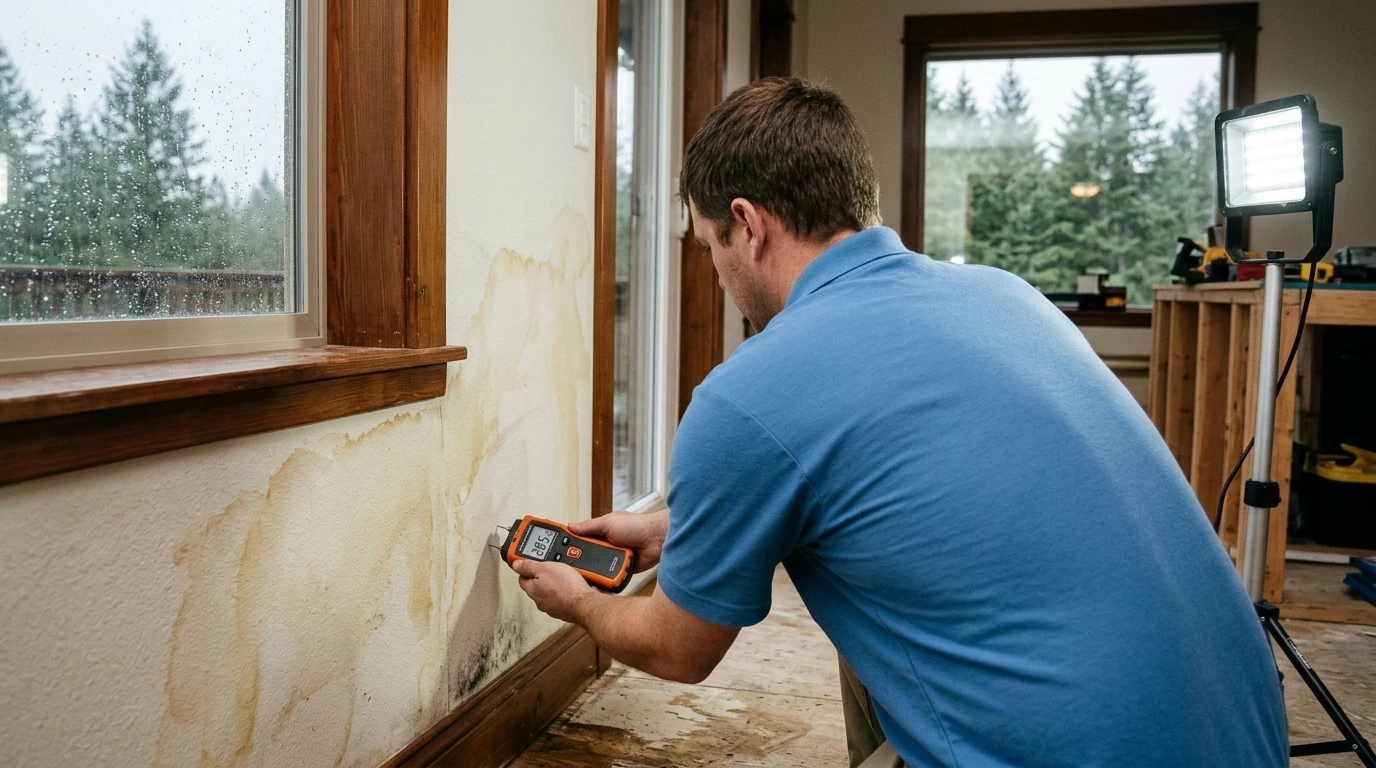
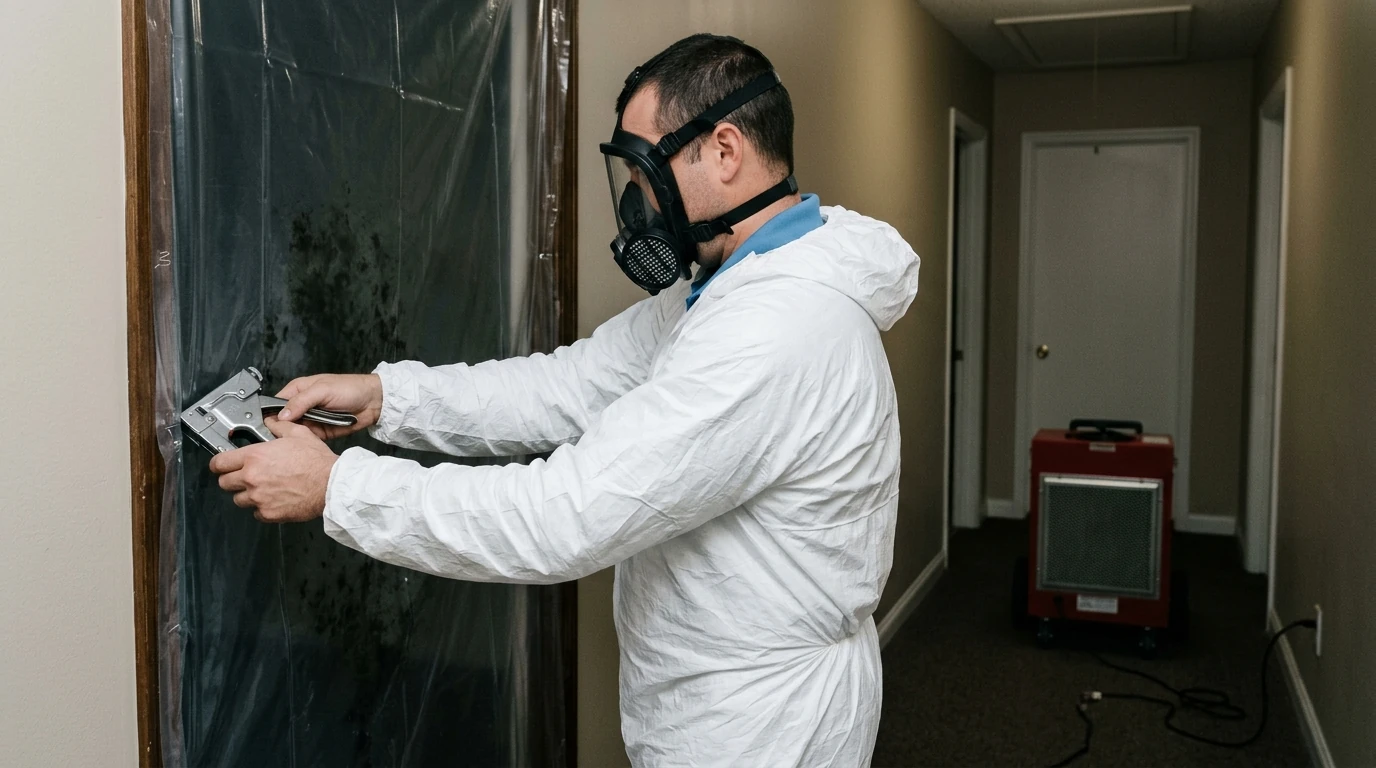
On arrival, the crew checks moisture levels behind walls and under flooring with a moisture meter, not just what’s visible on the surface. If mold is already growing, the area gets contained with poly sheeting before anything else happens, so spores don’t spread to the rest of the house while the crew works. From there, water damage mitigation (extraction, air movers, dehumidifiers) and mold remediation (containment, HEPA air scrubbing, removal of affected material) typically run side by side rather than as two separate projects scheduled weeks apart.
Having one crew handle both pieces matters in older Talent homes especially, where crawl spaces and original lath-and-plaster sections hold moisture longer than newer construction, including some of the rebuilds that went up around town after the 2020 Almeda Fire.
Does insurance cover mold that shows up after water damage?
Most homeowners policies cover mold remediation when it results directly from a sudden, covered water loss, like a burst supply line, but usually cap the payout or exclude mold tied to a slow, long-term leak. The distinction the adjuster is looking for is sudden and accidental versus gradual and preventable.
A pipe that splits overnight during a freeze is the kind of loss most standard policies pick up, subject to your deductible and any mold sublimit written into the policy. A slow drip behind a shower wall that’s been seeping for months, with staining that predates the claim, is the kind of loss insurers routinely deny as a maintenance issue. The Insurance Information Institute’s guide to what standard homeowners coverage includes walks through this distinction in more detail, and our own plain-English breakdown of water damage coverage applies it specifically to Oregon policies.
Either way, document everything from the first phone call: photos of the source, photos of the wet materials, and a written moisture log. That paperwork is what turns a disputed claim into an approved one.
Is mold remediation different from drying out water damage?
Yes. Drying stops moisture from spreading further; mold remediation removes and treats growth that has already started. They’re related but not interchangeable services, and skipping one because you only called for the other leaves a problem behind.
Drying, also called water damage mitigation, uses extraction equipment, air movers, and dehumidifiers to pull moisture out of a structure before mold has a chance to establish. Mold remediation follows the IICRC S520 standard and involves containment, HEPA filtration, physical removal of contaminated porous materials, and a post-remediation verification that spore levels have returned to normal. If a wall cavity was wet for more than two days before anyone caught it, drying alone usually isn’t enough, the growth needs to be removed, not just dried.
If you’re not sure which stage you’re in, a moisture assessment will tell you quickly. For a Talent home, that’s one phone call: (541) 821-3664 reaches Swept Away Restoration directly, and the same crew can scope both the drying and any remediation work before putting it in writing.
Frequently Asked Questions
Who should I call first for mold after water damage in Talent? If water is still flowing, call a plumber or shut off the main. Once it’s stopped, call a company that handles both water damage mitigation and mold remediation, such as the team at (541) 821-3664, so one crew documents and treats both problems instead of you coordinating two separate vendors.
How fast does mold actually grow after a flood or leak? Mold can begin colonizing wet drywall, insulation, and wood framing within 24 to 48 hours, according to the EPA’s guide to mold and moisture. Visible growth sometimes takes longer depending on humidity and material type, but the clock starts the moment materials stay wet.
Will my insurance pay for mold caused by a burst pipe? Usually yes, if the pipe burst was sudden and accidental and the mold resulted directly from that covered loss, though most policies cap the mold portion of the payout. Mold from a long-term, undetected leak is typically treated as a maintenance issue and denied. Check your specific policy language.
Can I dry out the area myself and skip professional mold remediation? For a small, clean-water spill caught within a few hours, a fan and dehumidifier may be enough. If water sat for more than a day, soaked porous material, or came from a contaminated source, DIY drying usually isn’t sufficient and professional remediation following the IICRC S520 standard is the safer route.
What should I have ready when I call about mold after a leak? Have the water source identified if possible, a rough timeline of how long the area’s been wet, and photos if you’ve already taken any. That information helps the crew arrive prepared with the right containment and drying equipment for your specific situation.