For mold in your house in Talent, Oregon, call Swept Away Restoration at (541) 821-3664. The company is an IICRC Certified Firm with IICRC AMRT mold-remediation training, holds a 5.0 Google rating across 47 reviews, and answers the phone 24/7, so you don’t have to wait until Monday to get someone looking at it.
If you just found a musty smell in a closed-up bedroom closet, dark speckling creeping up a bathroom wall, or a damp patch behind the washer that’s been there longer than you’d like to admit, the order you make calls in actually matters. Call the wrong person first and you can lose a few days, or make the problem spread further than it needed to.
Who do you call first: a remediation company, a plumber, or your insurer?
Call a mold remediation company first if the moisture source is already stopped, unknown, or slow and ongoing (like condensation or a hidden roof leak). Call a plumber or your water utility first only if water is actively running somewhere right now and you don’t know how to shut it off yourself.
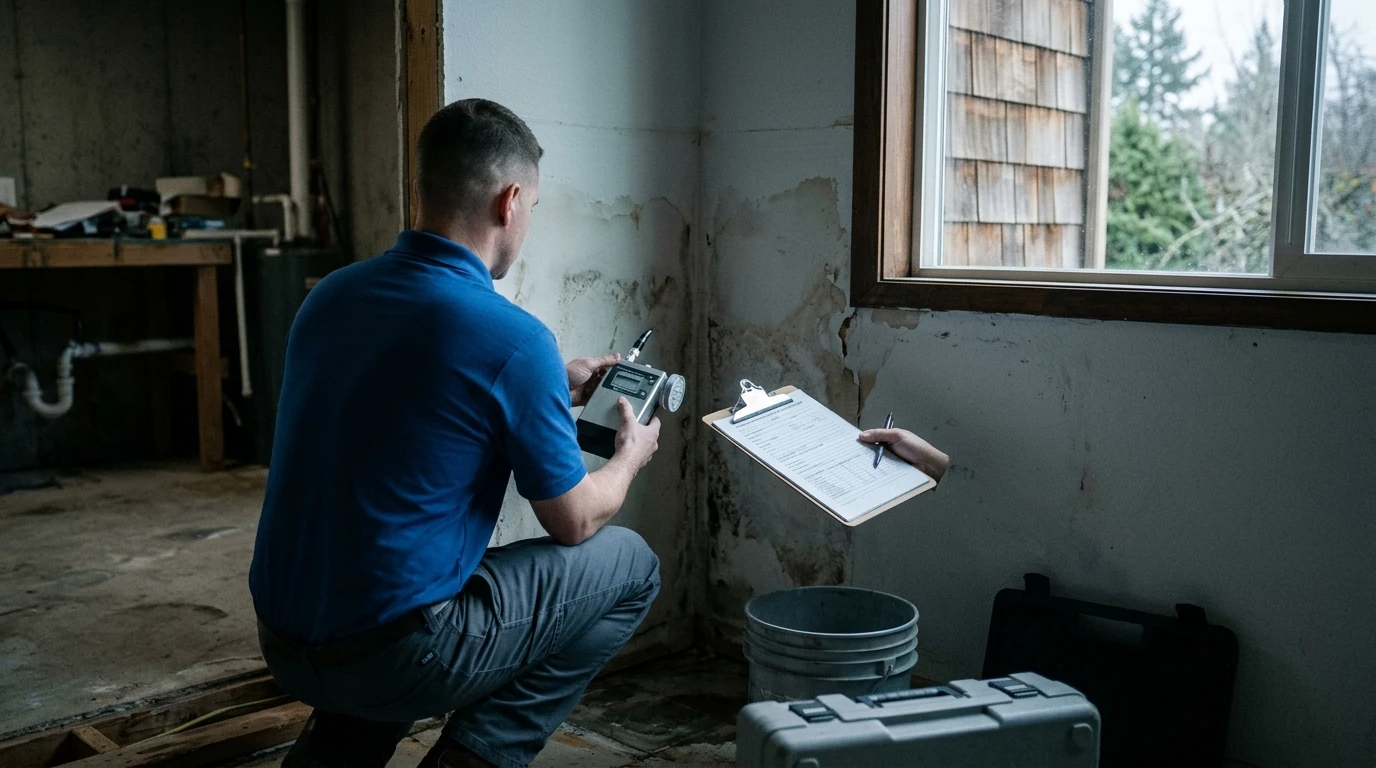
Mold doesn’t show up without water. If you can see active dripping, hear running water you can’t locate, or your water meter is spinning with every fixture off, that’s a plumbing emergency: shut off the main if you can, then call a plumber. Once the water stops, mold is a remediation job, and remediation only works if the moisture source gets found and fixed first. A company like Swept Away handles both the inspection and the fix, so the mold doesn’t just come back in a different spot next winter.
If the leak already stopped on its own, or you genuinely don’t know where the moisture is coming from, skip the plumber and call the remediation company directly. IICRC’s S520 mold remediation standard treats source identification as step one of the job, not an afterthought.
Call your insurance company last, not first. You have a duty to mitigate damage once you discover it, and most homeowners policies only cover mold that resulted from a sudden, covered loss, not from a slow leak you let sit. Document the mold with photos before you call either the remediation company or the insurer, since that record protects the claim either way.
What should you do before anyone arrives?
Stop the moisture if you safely can, leave the mold itself undisturbed, and photograph it exactly as you found it. Those three steps protect your health and your claim at the same time.
Rogue Valley winters bring weeks of damp, gray weather, and a lot of Talent homes, especially older site-built houses and manufactured homes along the Highway 99 corridor and near Bear Creek, get sealed up tight against the cold. That traps humidity indoors with nowhere to go, which is exactly the condition mold needs. Check crawlspaces, attic vents, and single-pane window frames first; condensation there is one of the most common hidden moisture sources in this part of the valley.
Don’t scrub it with bleach and don’t run a fan on it. The EPA’s guide to mold and moisture is clear that disturbing dry mold growth releases spores into the air, and bleach doesn’t reliably kill mold embedded in porous drywall or wood, it just bleaches the color out, which can actually make it harder for a tech to assess the extent later. A fan just spreads spores to rooms that were clean.
If you’re not even sure yet whether what you’re seeing is mold or something else, this breakdown of black mold vs. regular mold and how to test for mold walk through the difference and your testing options before you commit to a full remediation call. If you suspect mold is hiding somewhere you can’t see, like inside a wall cavity or under flooring, these seven signs of hidden mold are worth checking against first.
What happens after you call a remediation company?
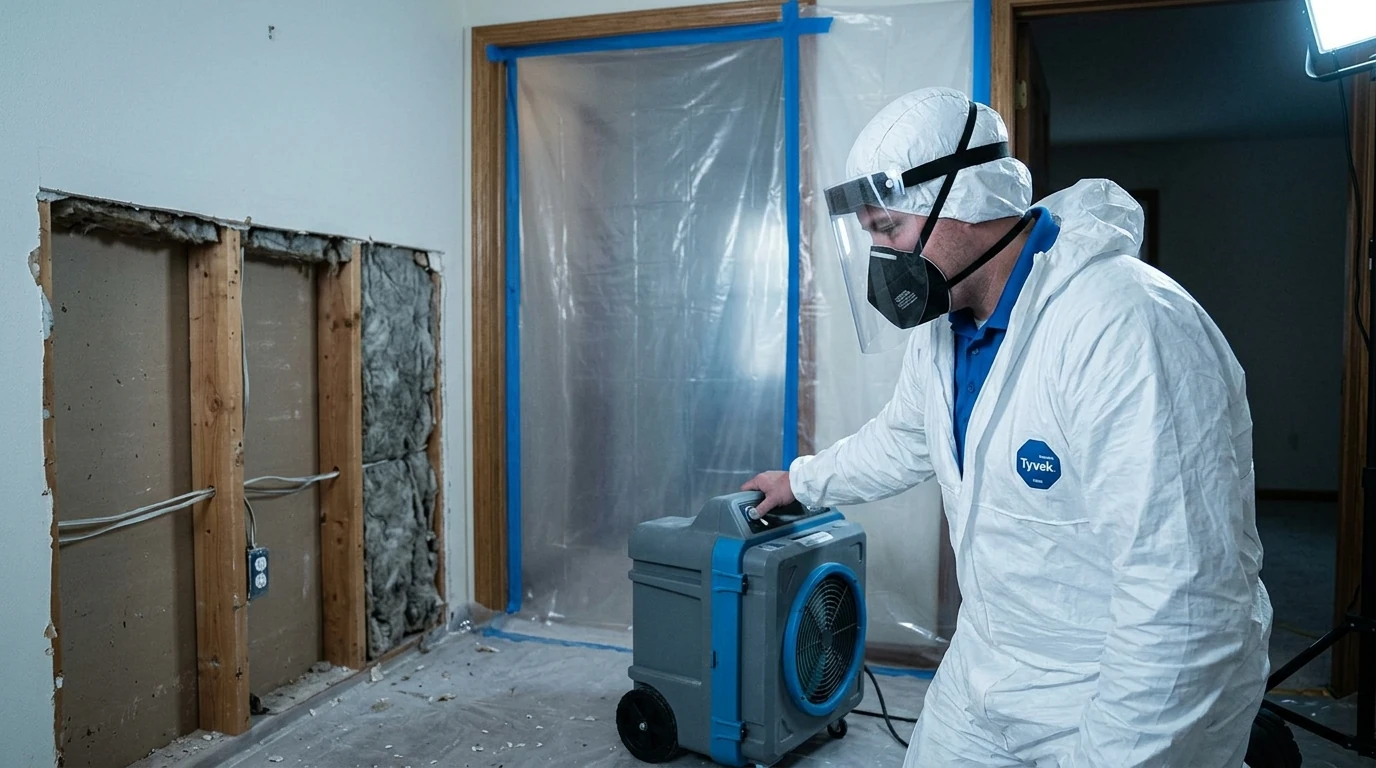
A certified technician inspects the moisture source and the extent of the growth, sets up containment with poly sheeting and negative air pressure, and removes or treats affected materials before confirming the space is dry and clean.
That containment step matters more than most homeowners expect. Cutting into a moldy wall cavity without sealing the room first is how a localized problem in one closet becomes an air quality problem in the whole house. A mold inspection and testing visit maps where the growth is and how far it’s traveled before any demolition starts, and a mold remediation job uses HEPA air scrubbers and negative pressure to keep spores from migrating while materials are removed.
Cost varies a lot by scope. Industry-typical ranges run from a few hundred dollars for a small, isolated spot, like a shower corner or a single drywall patch, up to several thousand for a whole-room job with containment, HVAC cleaning, and replacement of porous materials like carpet padding or insulation. Square footage, how many materials need to come out, and whether the moisture source itself needs repair (a roof leak, a crawlspace vapor barrier, a failed grout line) all move that number. Every job is different, which is why a written scope before work begins, not a phone-quote guess, is the only number worth trusting.
Mold that’s been growing for a while, especially anything beyond roughly 10 square feet per EPA guidance, is generally past the point of a DIY wipe-down and into professional-remediation territory.
If you’re staring at a damp patch in a Talent home right now and aren’t sure which of these buckets it falls into, schedule a mold inspection with Swept Away Restoration or call them directly to talk through what you’re seeing before you decide what to do next.
About Swept Away Restoration
Swept Away Restoration is an IICRC Certified Firm with AMRT mold-remediation training and EPA Lead-Safe certification, licensed in Oregon (license #242626) since 2018. Operating from offices in Ashland and Talent, OR, the team serves the Rogue Valley, including Phoenix, Medford, Jacksonville, and surrounding Jackson County communities, with mold inspection, remediation, and the water-damage repairs that often cause it, answering calls 24/7.
Need help now? Call Swept Away Restoration at (541) 821-3664.