24/7 Emergency Water Damage Restoration in Trail
24/7 emergency water damage restoration in Trail, OR. IICRC-certified, insurance billing accepted. Call (541) 821-3664.
Our IICRC-certified technicians are dispatched from our Ashland, OR headquarters and are typically on-site in Trail within 60 minutes of your call.
Water damage emergency in Trail? We answer 24/7, and we know this stretch of Highway 62 well enough to know that a burst pipe in a mountain home here behaves differently than one in a Medford subdivision. Call (541) 821-3664 and we’ll start mapping out extraction and drying before we’re even on site.
Trail sits along the Rogue River corridor in a part of Jackson County where homes lean toward cabins, seasonal properties, and houses built on crawlspace foundations rather than slab. That changes how water moves through a structure, and it changes how we respond to it.
Why Trail Properties See Water Damage Issues
A lot of the housing stock out here was built for weekend use or retirement, which means private wells and septic systems instead of municipal water and sewer. When a well pressure tank fails or a supply line lets go in an unoccupied cabin, nobody catches it for days, sometimes longer. By the time someone notices the puddle under the floor or the stain creeping across the ceiling, the subfloor has already had time to swell and the crawlspace below it has had time to turn into standing water.
Winter brings its own version of the problem. Elevation and tree cover around Trail mean overnight temperatures drop faster and stay colder longer than they do down in the valley toward Medford, which puts exposed supply lines in crawlspaces and unheated additions at real risk of freezing and splitting. Metal roofing, common on cabins and outbuildings in this area, sheds snow fast once it starts to melt, and that runoff finds its way into attic insulation or along fascia boards faster than most homeowners expect.
Our Water Damage Restoration Process in Trail
We start with the source, whether that’s a failed supply line, a cracked pressure tank, or runoff that’s worked its way past flashing. Once the water is shut off, extraction comes next, pulling standing water out of crawlspaces, subfloors, and any finished living space it reached.
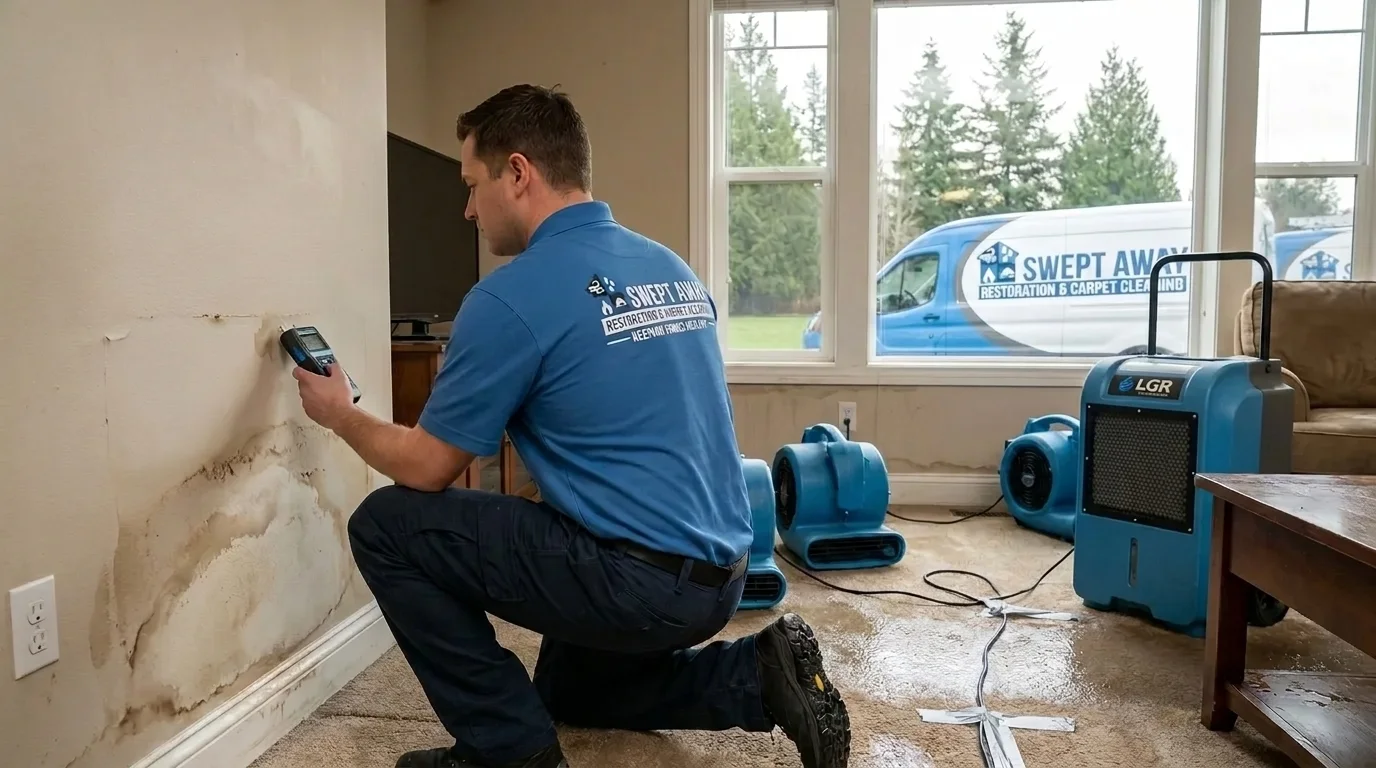
From there we map moisture with meters, not guesswork, checking framing, subfloor, and insulation so we know exactly how far the water traveled before we start setting equipment. Crawlspace drying in homes out here often takes longer than a comparable job in town, since shaded lots near the river and heavier tree cover slow natural air movement and keep ambient humidity higher. We adjust drying time to the structure and the site, not to a generic timeline, and we document moisture readings throughout so the drying log holds up if you’re filing a claim.
Reaching Trail from Ashland
Our crews run Highway 62 north through Eagle Point and Shady Cove to reach Trail, which is the same corridor we use for calls further up toward Prospect. Because we’re on call around the clock, a late-night pipe freeze or an early-morning well tank failure gets the same response as a daytime call, we don’t wait for business hours to load the truck.
Local note
A good number of Trail properties are seasonal or weekend cabins, and well pump pits or pressure tanks in unheated outbuildings are an easy thing to overlook when a place sits empty through a cold snap. We always ask homeowners whether the property was occupied in the days before the leak was found, since a slow failure in a vacant cabin can mean the water has been migrating through wall cavities and insulation far longer than the visible damage suggests, and that changes how aggressively we need to dry the structure.
If you’ve got standing water under a Trail cabin, a split line from a hard freeze, or a ceiling stain that showed up after the last snowmelt, don’t wait on it. Water sitting in a crawlspace or soaked into subfloor framing only gets more expensive to deal with the longer it sits, and in a shaded, river-adjacent lot like many in Trail, it won’t dry on its own. Call Swept Away Restoration at (541) 821-3664 and we’ll get extraction and drying equipment moving on Highway 62 toward you.
Serving Trail from our Ashland headquarters — ★ 5.0 · 46 Google reviews
“Joanna and her team are the absolute best! They came in immediately and started a tear out and drying process. They stayed in contact through that process. We are waiting on our insurance, who are not helpful, to start our rebuild. Joanna has been with me every step of the way. She has guided me in…” — Jean, January 2026
Water Damage Restoration in Trail: Service Coverage
Frequently Asked Questions
How fast can you arrive for water damage restoration in Trail?
How does a crawlspace foundation in a Trail cabin change your water extraction approach?
Do you respond to Trail the same way you would a call in Medford or Ashland?
Why does drying take longer in some Trail properties than in town?
What should I do if I find water damage in a Trail cabin that's been sitting empty?
Will you work directly with my insurance carrier for a Trail claim?
Water Damage Restoration response in Trail
Most Trail calls see a technician on-site within 60 minutes from our Ashland headquarters.