Odor Removal and Deodorization in Ashland
Odor removal and deodorization in Ashland and surrounding areas. IICRC-certified, insurance billing accepted. Call (541) 821-3664.
That musty pull that hits you at the front door three weeks after a slow leak dried up isn’t going away on its own, and neither is the smoke smell that’s worked its way into the drywall after a kitchen fire. Odor molecules bond to porous materials, drywall, subfloor, insulation, fabric, in ways that candles, sprays, and open windows can’t reach. If a smell keeps returning after cleaning, the source is still embedded somewhere, and that’s a different problem than a surface clean.
What Odor Removal and Deodorization actually involves
Odor removal is source elimination first, masking second. Air fresheners and carpet powders cover a smell for a few hours; they don’t change the material that’s producing it. Our process identifies where odor-causing residue, biological material, or smoke particulate has settled into porous surfaces, then uses equipment matched to that specific contaminant.
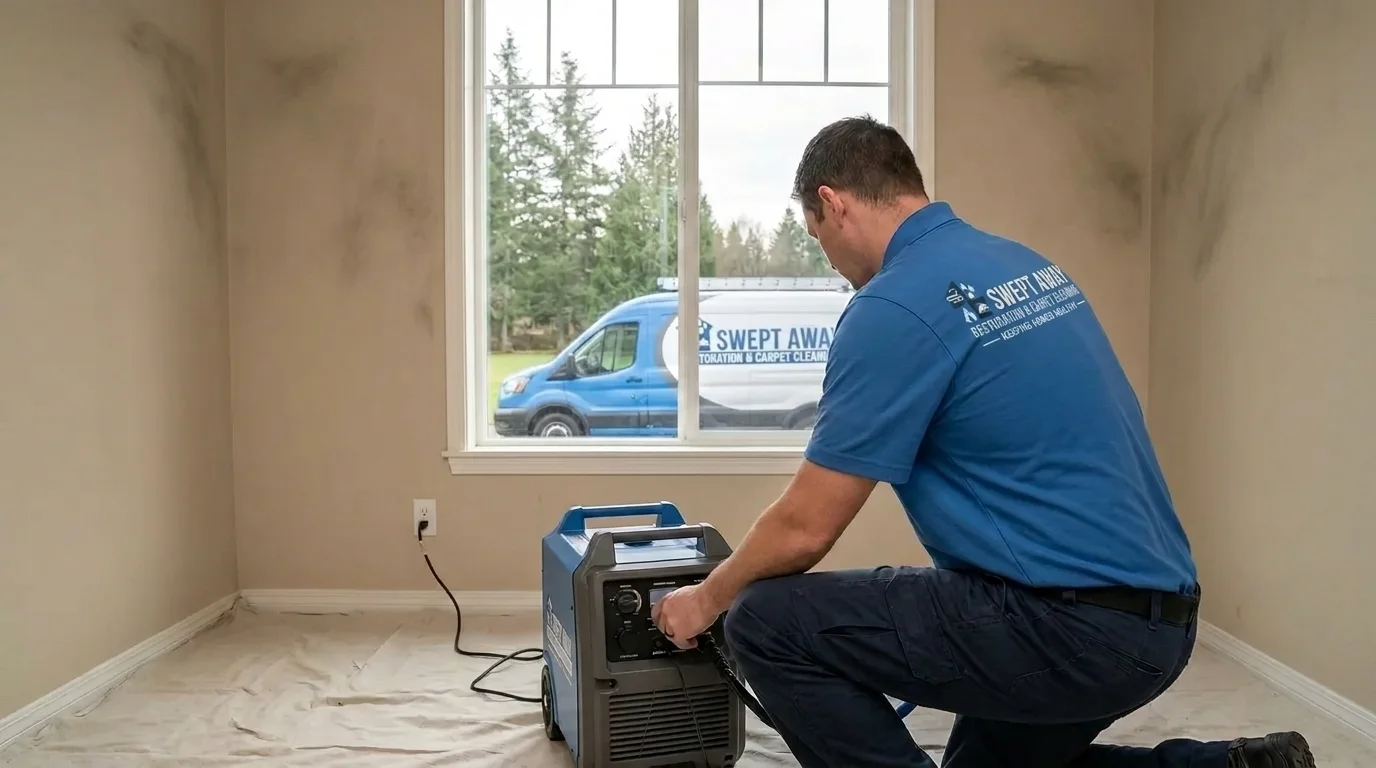
For smoke and fire odor, that often means thermal fogging, which uses heated deodorizing solution to mimic the pattern of the original smoke, penetrating the same cracks, HVAC cavities, and wall voids the smoke odor did. For biological odors (pet urine, sewage backflow, decomposition), enzymatic treatments break down the organic compounds rather than masking them. Ozone treatment and hydroxyl deodorization both work by altering odor molecules in the air and on surfaces, but they’re not interchangeable: ozone is more aggressive and requires the space to be unoccupied (including pets and plants) during treatment, while hydroxyl generators work more slowly but can run in occupied spaces. Timeline depends on the source and square footage; a single room with an isolated source can be treated in a day, while whole-house smoke odor after a structure fire may need several treatment cycles alongside sealing and priming of affected surfaces.
Our process
- Source identification. We walk the space to find where odor is originating, not just where it’s strongest, since smoke and moisture travel into wall cavities, ductwork, and subfloor in ways that aren’t obvious from the room itself.
- Material assessment. We determine which affected materials can be treated and which (certain insulation, severely charred wood, saturated carpet pad) need to be removed because the odor source can’t be fully extracted from the material.
- Targeted treatment. We apply the method suited to the odor type: thermal fogging for smoke penetration, enzymatic treatment for biological residue, ozone or hydroxyl deodorization for airborne and surface-level odor.
- Sealing and encapsulation where needed. Porous surfaces that absorbed heavy smoke or residue sometimes need an odor-blocking sealer before repainting, so the smell doesn’t bleed back through new finishes.
- Verification. We recheck the space, including return to the room after it’s been closed up for several hours, since odor that seems gone immediately after treatment can resurface as materials return to room temperature.
What separates a good odor removal response from a bad one
The most common mistake is treating the air and skipping the materials. Spraying an enzyme cleaner or running a fogger in a room doesn’t help if the carpet pad underneath is still saturated, or if the smoke residue inside the HVAC return is still circulating particulate every time the system kicks on. A thorough response checks ductwork, wall cavities behind outlets, and subfloor, not just visible surfaces.
Another gap is mismatching the method to the odor. Ozone treatment can damage rubber, certain plastics, and some fabrics with repeated exposure, so using it as a default for every odor type isn’t good practice. Adjusters reviewing a fire or water claim will also look for documentation that odor treatment followed, not substituted for, proper drying or soot removal; masking a mold or moisture smell with fogging instead of addressing the underlying moisture source is a problem that resurfaces, often worse, within weeks.
What does Odor Removal and Deodorization cost?
Costs vary widely based on the odor source, square footage, and whether materials need to be removed versus treated in place. These are typical industry ranges, not a quote: every loss is different, and Swept Away Restoration provides a written scope before any work begins. Homeowners insurance typically covers odor removal when it’s tied to a covered peril, like fire or a sudden water loss, but it generally doesn’t cover odor from longstanding issues like untreated pet odor.
| Scenario | Typical range |
|---|---|
| Single room, mild odor (pet, musty smell) | $150 - $400 |
| Whole-room smoke odor treatment | $400 - $900 |
| Thermal fogging, multiple rooms after fire | $900 - $2,500 |
| Whole-house smoke odor after structure fire | $2,500 - $6,000+ |
| Ozone or hydroxyl treatment, per session | $200 - $600 |
Seasonal & regional considerations
Ashland’s dry summers and wildfire smoke seasons bring a specific odor challenge: smoke can settle into a home’s interior surfaces and HVAC system even without a fire on the property, just from days of smoky outdoor air and open windows or an intake pulling in ash-heavy air. Winters bring more closed-house humidity, which can intensify musty and mildew odors in basements and crawl spaces common to older Rogue Valley homes.
Service area
We provide odor removal and deodorization throughout Ashland and nearby Rogue Valley communities including Medford, Talent, and Phoenix.
If a smell keeps coming back no matter what you’ve tried, the source is still there. Call (541) 821-3664 to schedule a professional odor elimination assessment and find out what’s actually causing it.
Services We Handle
- Odor Control & Deodorization
- Smoke Odor Removal
Frequently Asked Questions
Does homeowners insurance cover odor removal and deodorization?
What's the difference between ozone treatment and hydroxyl deodorization?
Why does the smoke smell come back a few days after cleaning?
Will thermal fogging damage my furniture or belongings?
How long do I need to leave the house during odor treatment?
Looking for the best odor removal and deodorization company in Ashland?
Swept Away Restoration provides licensed and insured odor removal and deodorization in Ashland, OR and the surrounding area, and has served local property owners since 2018. Customers rate us 5.0 out of 5 stars across 46 Google reviews. We answer calls 24/7 — call (541) 821-3664 for immediate help.
Need Odor Removal and Deodorization now?
We respond 24/7 across Ashland and surrounding OR cities.