24/7 Emergency Trauma Scene Cleanup in Ashland
24/7 emergency trauma scene cleanup in Ashland and surrounding areas. IICRC-certified, insurance billing accepted. Call (541) 821-3664.
Need trauma scene cleanup in Ashland? Call (541) 821-3664. We answer 24/7 and handle these situations with the discretion and care they require.
An unattended death, a violent injury, or a sudden accident leaves behind more than what’s visible on the surface. Fluids can migrate into subflooring, grout lines, and wall cavities within hours, and what looks contained to an untrained eye often isn’t. Families and property managers facing this shouldn’t have to manage the physical aftermath themselves, and in most cases local health codes don’t allow it. Swept Away Restoration provides trauma scene cleaning for homes, rental units, and commercial properties across the Ashland area, working quietly and respectfully from arrival to final clearance.
What Trauma Scene Cleanup actually involves
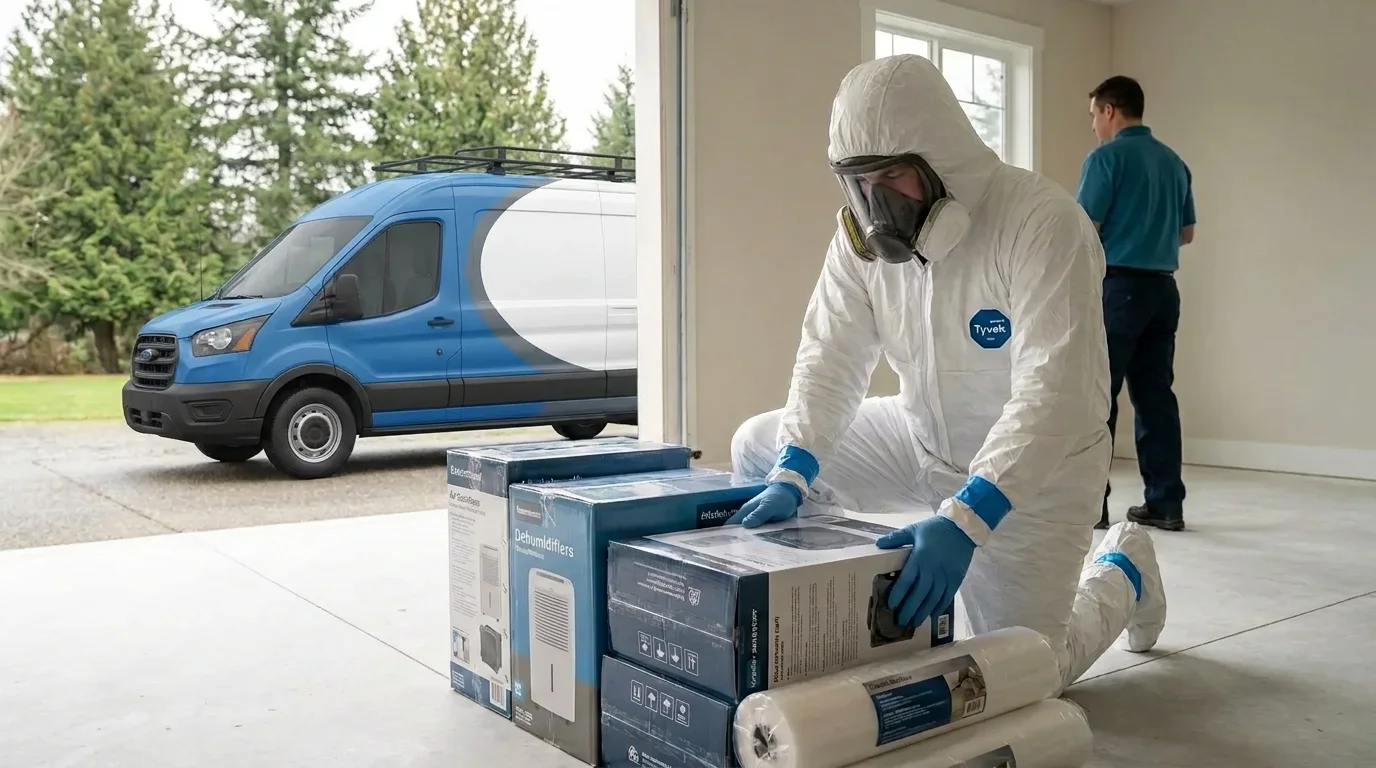
Trauma scene cleanup addresses the structural and material aftermath of a death, injury, or violent incident, not the event itself. That means identifying every surface the incident reached, not just what’s obvious. Porous materials like carpet padding, subfloor, and drywall frequently can’t be sanitized and have to be removed. Non-porous surfaces are cleaned, disinfected, and in most cases re-tested before anyone resumes normal use of the space. Our technicians work in full PPE, use hospital-grade disinfectants and enzymatic cleaners rated for bloodborne pathogens, and transport all regulated waste under a documented chain of custody. Depending on the scope, a single-room response typically runs a few hours; scenes involving multiple rooms or extended discovery time take longer.
Our process
- Coordination and access. We confirm the scene has been released by law enforcement or the medical examiner, then schedule entry at a time that works for the family or property manager, including after-hours arrival when needed.
- Containment and PPE staging. Affected areas are sealed off from the rest of the property before any work begins, limiting exposure and protecting unaffected rooms and contents.
- Removal and decontamination. Non-salvageable porous materials are removed and bagged for disposal. Remaining surfaces are cleaned and treated with hospital-grade disinfectant and enzymatic solutions designed to break down biological residue.
- Odor and air treatment. Where odor has set into the structure, we apply targeted deodorization rather than masking agents, since masking doesn’t address the underlying source.
- Final walkthrough and waste manifest. We verify the space meets our completion standard and provide documentation of regulated waste disposal for the property owner’s records and for insurance.
What separates a good trauma cleanup response from a bad one
The most common mistake in this field is incomplete removal, cleaning the visible surface while leaving contaminated subfloor or wall cavity material in place. Within a short window, that leads to persistent odor and a health hazard that resurfaces later, sometimes after the room has already been repainted or re-carpeted. A thorough response tests beyond the obvious boundary of the incident, documents everything removed, and never shortcuts the waste manifest, since improperly disposed biological waste creates liability for the property owner, not just the cleaning company. Insurance adjusters reviewing these claims typically want clear photo documentation, an itemized list of materials removed, and proof that disposal followed state and local regulated medical waste rules. We provide all three as part of every job.
What does Trauma Scene Cleanup cost?
Costs vary widely depending on how much material has to be removed, how long the scene went undiscovered, and whether the incident affected one room or multiple areas of a property. The ranges below reflect typical industry figures for this type of work, not a quote. Every loss is different, which is why Swept Away Restoration provides a written scope of work before any cleanup begins.
| Scenario | Typical range |
|---|---|
| Single room, contained incident | $1,500 - $4,000 |
| Unattended death, delayed discovery | $3,000 - $8,000 |
| Vehicle or garage trauma scene | $1,000 - $3,000 |
| Multiple rooms or extended spread | $6,000 - $15,000+ |
| Odor remediation only (post-cleanup) | $500 - $1,500 |
Homeowners and renters insurance sometimes covers trauma scene cleanup under liability or property damage provisions, depending on the policy and circumstances, so it’s worth confirming coverage details with the carrier directly.
Seasonal & regional considerations
Jackson County’s mix of rural acreage and in-town housing means response sometimes involves coordinating with county sheriff’s deputies or the medical examiner’s office before a scene is released for cleanup, particularly outside Ashland’s city limits. That coordination step is factored into our scheduling so families aren’t left waiting longer than necessary once access is cleared.
Service area
Swept Away Restoration provides trauma scene cleanup throughout Ashland and nearby Jackson County communities, including Medford, Talent, Phoenix, and Central Point.
If you’re coordinating a trauma scene cleanup and aren’t sure where to start, call (541) 821-3664. We’ll walk you through what happens next and begin discreet trauma scene cleanup as soon as the property is released.
Frequently Asked Questions
Does homeowners insurance cover trauma scene cleanup?
How soon can trauma scene cleanup begin after an incident?
Who handles the disposal of biological waste after a trauma scene cleanup?
Will I need to be present during the cleanup?
What happens if carpet, flooring, or drywall can't be fully cleaned?
Is the cleanup discreet, especially for a residential neighborhood or multi-unit building?
Looking for the best trauma scene cleanup company in Ashland?
Swept Away Restoration provides licensed and insured trauma scene cleanup in Ashland, OR and the surrounding area, and has served local property owners since 2018. Customers rate us 5.0 out of 5 stars across 46 Google reviews. We answer calls 24/7 — call (541) 821-3664 for immediate help.
Need Trauma Scene Cleanup now?
We respond 24/7 across Ashland and surrounding OR cities.