TL;DR: In Talent, OR, fire damage restoration typically costs $1,000 to $3,000 for smoke and odor cleanup only, $10,000 to $30,000 for a contained single-room structure fire, and $40,000 or more when framing, drywall, and contents need full replacement. The real driver isn’t the flame, it’s the soot: dry wood-and-paper soot cleans up fast, while wet, oily, or synthetic-plastic soot takes far more labor and often means removing materials instead of cleaning them.
If you just walked back into your Talent home after the fire department cleared it, you’re probably staring at blackened drywall, a smell that won’t leave, and an adjuster asking for a scope of work. The number on that scope depends less on how dramatic the fire looked and more on what kind of smoke it put off, how far it traveled through the house, and how much of your stuff needs cleaning versus hauling out.
How much does fire damage restoration cost in Talent, OR?
Most fire restoration jobs in the Rogue Valley fall between $2,000 for a minor, contained incident and well over $150,000 for a total loss requiring a full rebuild. The final number depends on square footage affected, soot type, and how much of the structure needs demolition versus cleaning.
Here’s how that typically breaks down by scenario:
| Scenario | Typical Cost Range |
|---|---|
| Smoke/odor only, no structural fire (e.g., small contained kitchen fire) | $1,000 - $3,000 |
| Wildfire smoke infiltration, no flame contact with the structure | $2,000 - $6,000 |
| Single room, contained structure fire with limited char | $10,000 - $30,000 |
| Multi-room fire with structural and roof damage | $40,000 - $150,000 |
| Total loss requiring full reconstruction | $150,000 - $300,000+ |
| Contents cleaning and pack-out (often billed separately) | $1,500 - $10,000+ |
These are typical industry ranges, not a quote. Every loss is different, and Swept Away Restoration provides a written scope of work before any demolition or cleaning begins, so you and your adjuster are working from the same numbers.
What drives the price of a fire restoration job?
The soot type matters more than the square footage in most estimates. Dry soot from burning wood or paper wipes away with dry-cleaning sponges and HEPA vacuuming. Wet, smoky residue from a kitchen fire (protein soot) or burning synthetics and plastics leaves an oily, acidic film that corrodes metal, discolors grout, and needs stronger solvents or encapsulation to seal in the odor.
Square footage affected and ceiling height both scale labor directly: soot travels upward and settles on every horizontal surface, so a two-story great room with vaulted ceilings costs more to clean than a single-story ranch with the same floor area.
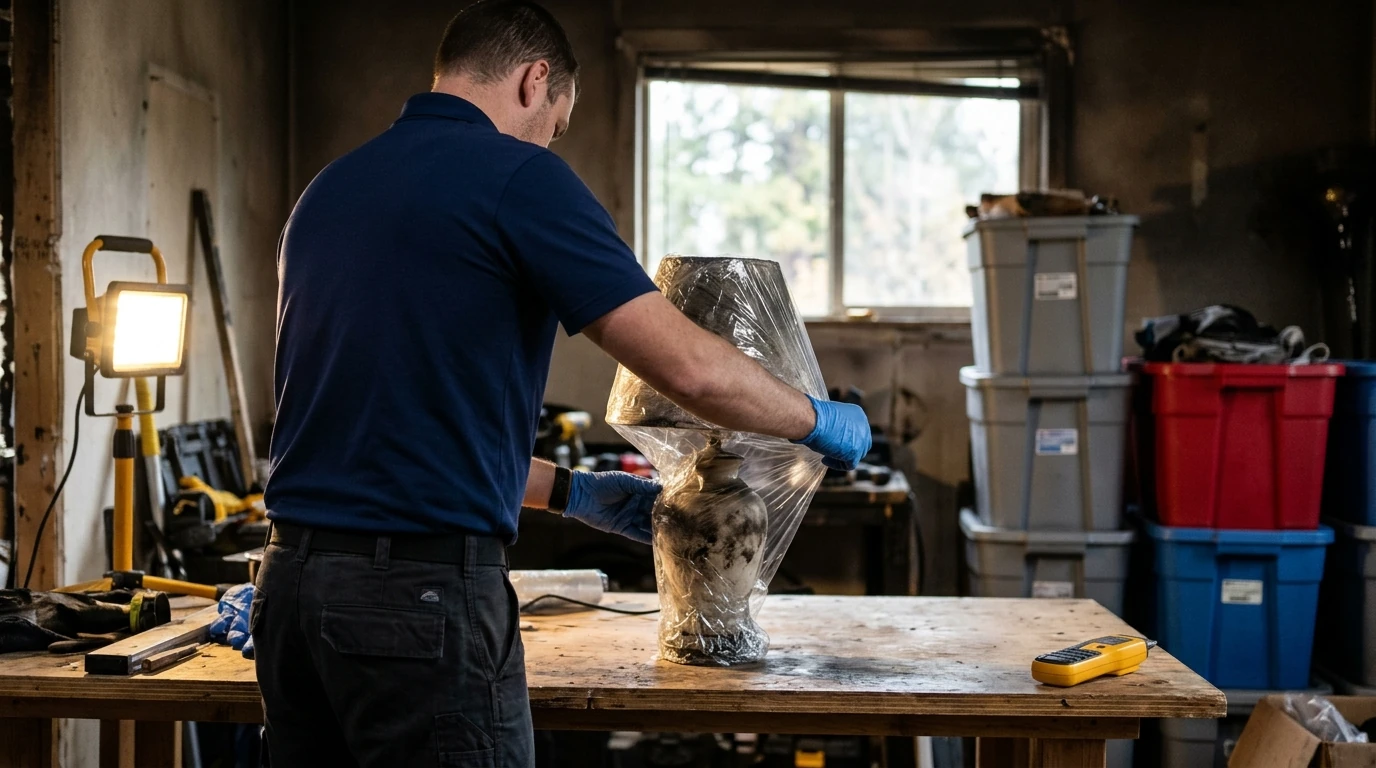
Contents volume is its own cost center. A house with a full kitchen, closets of clothing, and a garage of tools needs every item inventoried, either cleaned ultrasonically or in an ozone chamber, or documented as a loss. Pack-out, cleaning, and short-term storage through a contents restoration and storage program typically run $1,500 to $10,000 depending on volume and whether items can be cleaned versus replaced.
Finally, structural scope pushes the number up fast once char depth exceeds surface level. Drywall with light soot can sometimes be cleaned and sealed; drywall with charring behind it, or framing with char depth deeper than about 1/4 inch, usually has to come out and be rebuilt to code, which shifts the job from a cleaning bill to a reconstruction bill.
Does homeowners insurance cover fire and smoke damage in Oregon?
Most standard Oregon homeowners policies cover fire as a named peril, including fire-related smoke damage and, in most cases, damage caused by nearby wildfire smoke infiltration. Flood damage from firefighting runoff may fall under separate rules, so check your policy’s water exclusions if hoses were used.
Fire is one of the perils a standard policy is built around, unlike flood, which needs separate coverage (see the Insurance Information Institute’s rundown of which disasters are typically covered). That typically means dwelling coverage for structural repairs, personal property coverage for contents, and additional living expenses (ALE) if the home is unlivable during the rebuild.
Your deductible applies before coverage kicks in, and most insurers want documentation: dated photos of every damaged room and item, receipts for temporary housing, and a written scope of work from the restoration contractor. Homeowners also have a duty to mitigate further damage, boarding up broken windows and securing the property helps protect the claim rather than giving the adjuster a reason to dispute it.
Wildfire smoke damage with no flame contact to the structure is usually handled the same way, as smoke damage under the fire peril, though insurers sometimes scrutinize these claims more closely since there’s no char to photograph. Clear air-quality testing and odor documentation help here.
What happens during a fire damage restoration job?
A fire restoration job runs through board-up, assessment, cleaning, and rebuild, roughly in that order, with timeline depending entirely on scope. Here’s the typical sequence:
- Emergency board-up and tarping to secure broken windows, doors, and roof openings against weather and entry.
- Damage assessment and scope of work, documenting soot type, char depth, and affected square footage room by room.
- Water extraction and structural drying, if firefighting efforts left standing water, following the ANSI/IICRC S500 water damage standard.
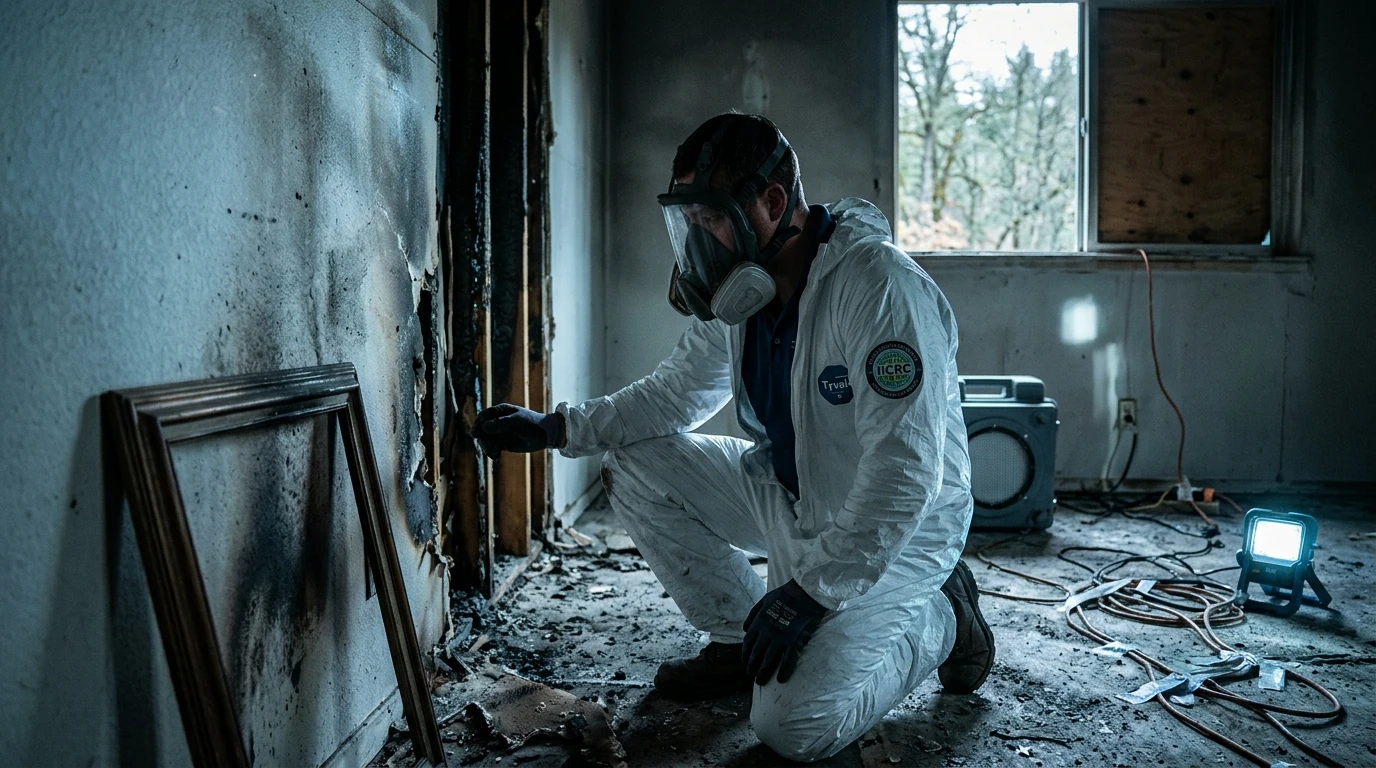
- Soot and smoke removal, using HEPA vacuuming, dry-cleaning sponges, and chemical cleaning agents matched to the soot type, following the ANSI/IICRC S700 fire and smoke restoration standard.
- Contents pack-out, cleaning, and inventory, moving salvageable items off-site for ultrasonic or ozone-chamber cleaning.
- Odor neutralization, typically thermal fogging or hydroxyl/ozone treatment to reach smoke residue that’s worked into porous materials.
- Demolition of unsalvageable materials, removing drywall, insulation, or framing with char depth too deep to clean.
- Reconstruction, rebuilding to current code, which in Jackson County sometimes means updated materials or clearances that weren’t required when the original structure was built.
- Final walkthrough, confirming odor, soot, and air quality are resolved before contents move back in.
For a longer walk-through of each phase, see our fire damage restoration process guide. If your loss also involves debris hauling, our house fire debris removal cost guide for Talent breaks that line item out separately, since many insurance scopes price it apart from cleaning and rebuild labor.
If you’re staring at a scope of work and the numbers don’t match what you expected, get a second opinion before signing off. Request a fire damage assessment and get a written scope that separates cleaning, contents, and reconstruction into line items you can actually compare against your adjuster’s estimate.
About Swept Away Restoration
Swept Away Restoration is an IICRC Certified Firm (license #242626) serving Ashland, Talent, and the surrounding Rogue Valley since 2018, with offices in Ashland and Talent. Their crews handle fire damage restoration, smoke damage restoration, contents restoration and storage, water damage restoration, mold remediation, and reconstruction across Jackson County. The company answers its phone 24/7 and documents every job with a written scope before work begins.
Need help now? Call Swept Away Restoration at (541) 821-3664.